Wednesday, 30 April 2014

Argentina: Trained Killers


After weeks of hiking in Patagonia (the southern area of Argentina and Chile), it was a nice change to head north for some warmer weather. (It's still weird for me to say 'north' is warmer, but remember, the closer you are to the equator, the warmer and more constant the weather is, generally).

A Guanacho (kind of like a llama) crossing the water.
Guanachos are one of the only mammals
that can drink salt water.
It was a straight 32 hour bus ride that brought me to Puerto Madryn, Argentina on the eastern coast of South America. Here, it's easy to take a one-day car trip around Peninsula Valdes, an area known around the world to see Right Whales breeding. You can stand on the shore and watch them in the water...you don't even need to get in a boat to see them! We weren't there for the whales, though, (June-December is the best time to see whales, and it was the end of March when we arrived). Peninsula Valdes is known for another animal phenomenon: it's the only place in the world where you can see orcas beach themselves in order to catch seal and sea lion pups from the shore.


Peninsulas are areas of land that stretch away from the mainland, like an island, but still connected. They're surrounded by water on three sides.

Orcas, otherwise known as killer whales, are actually not whales, they're dolphins. They are incredibly intelligent hunters. While on the boat to Antarctica, I learned that some kinds of orcas work in teams to hunt seals lounging on icebergs. One orca will nudge the iceberg underneath to try to push the seal off, then another one will nudge the other side. They'll keep rocking the iceberg until the seal gets tired or confused or falls off and they can catch it. To know that their prey is not sick, orcas only eat animals that they have hunted themselves.

When we arrived in Puerto Madryn, we were disappointed to hear that it had been a difficult year for spotting orcas. For unknown reasons, they weren't coming as close to the coast as usual and they were hunting for food in other areas. So we didn't have our hopes up very high.

Fortunately, there are a few other things to see on the peninsula. We stopped at a large sea lion colony and watched the pups play in the surf. Sea lions, and elephant seals make an awful racket, barking and slapping around on the sand.

We also saw our fourth penguin species: the Megallanic. Larger than the three types we saw in Antarctica, these were also much quieter. They burrowed into the dirt to get away from the hot sun.

While we were observing the penguins, a truck came barrelling along the road with a siren on top spinning and wailing. Our driver quickly called to us, waving his arms frantically. "Orcas!" He shouted, "They've spotted orcas." We ran to the van and climbed in. He drove us to one of the best orca viewing point on the peninsula.

We waited nervously as they weren't actually there yet. Someone had spotted them down the coast and they were heading in our direction. But they could decide to turn around or go further out to sea. We crossed our fingers. Then one person pointed, and another called out, and we turned to see a group of five orcas swimming towards us, extremely close to the shore.


I couldn't believe how close to the beach they were! We watched them swim back and forth for an hour, with seals lying right there on the beach and even some swimming in the water, but they didn't try to attack. It was still so incredible to see them so closely. We left feeling very lucky and satisfied with our experience!

Saturday, 19 April 2014

Around the World: How Tall is Tall?

You might be wondering how all of these tall buildings and monuments I've been seeing stack up against each other. Sometimes, things look really big because there isn't anything else around it, or because everything else around it is very short. Sometimes, buildings can look shorter than they are because they're surrounded by really tall things. Here, I'll line them up to show you how tall they really are.

First, let's do a quick review of the standard units of measurement. I like to use a saying to help me remember the metric units:

"King Henry's Daughter Makes Delicious Chocolate Milk"

The first letter of each word stands for a unit of measurement:

Kilometers Hectometers Decameters Meters Decimeters Centimeters Millimeters

Or, in their short forms: km hm Dm  m dm  cm  mm

If you can remember this saying, then you'll remember the order of the units of measurement and easily be able to tell how many of one unit is equal to one of something else. For example, there are 10 mm in 1 cm; there are 10 cm in 1 dm. There are 10 dm in 1 m, and so on.

I will use meters to show how tall these buildings are. If you can picture a meter stick, then you'll have an reference to go by. For me, 1 m is equal to the distance between my feet and my hips.

So, let's take a look at the height of these World Famous Buildings standing side-by-side.


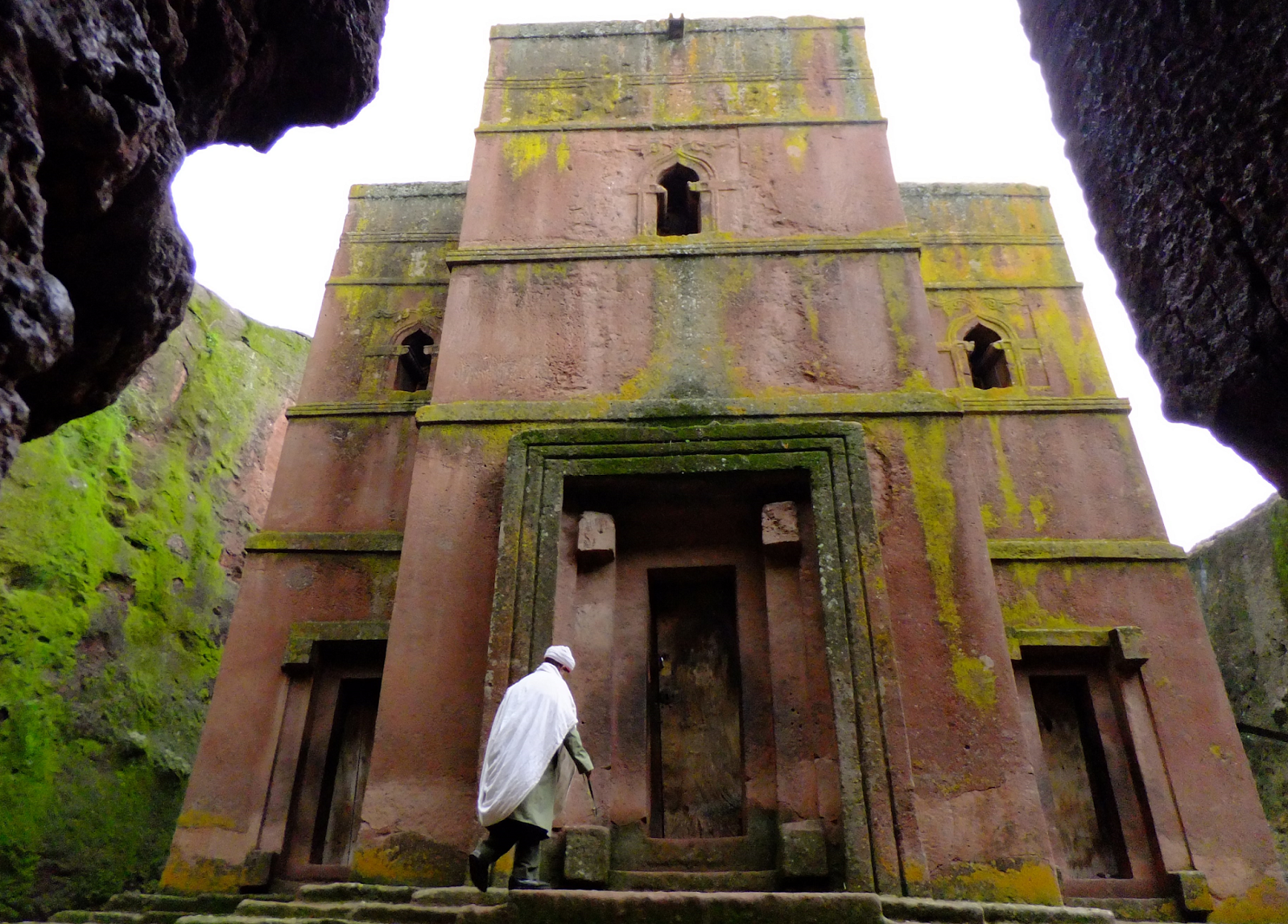
Eiffel Tower, France: 324 m                St George's church, Ethiopia: 12 m


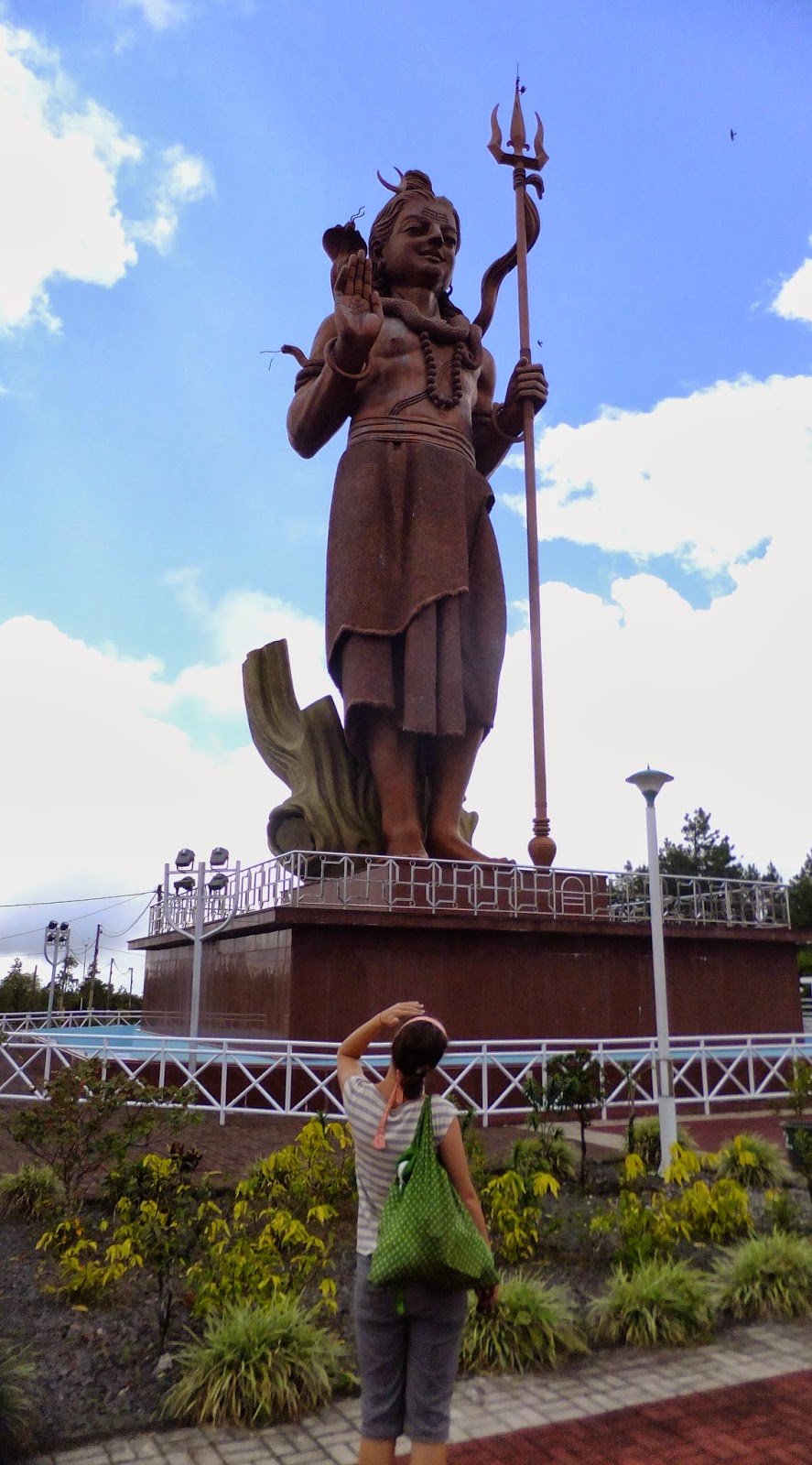
  Faro, Uruguay: 34 m                        Shiva statue, Mauritius: 33 m 


Qutb Minar, India: 73 m                 Calgary Tower, Canada: 191 m


CN Tower, Canada: 553 m                        Taj Mahal, India: 73 m

To see the difference in height between these structures, it would be even easier if we graphed them. I'll start by putting the heights up the y axis (the vertical line), and the names of the structures along the x axis (the horizontal line). Then, I'll use bars to show their heights. Now, I can really see how tall the CN Tower is compared with the other structures!


Organizing information in a graph is a great way to make more sense of it!

Saturday, 12 April 2014

Chile: Rockin' in Torres del Paine


The Andes is the world's longest mountain range, stretching over 7 000 km through 7 countries in South America. When I went to Antarctica, I learned that the Andes range goes even further... underwater... to Antarctica! The Andes is also the tallest mountain range outside of Asia with its peak, Mount Aconcagua, in Argentina, rising to 6962 m in elevation.


In Chile and Argentina, I did some hiking in some beautiful National Parks. I was amazed by the types of rock faces we were seeing; they looked so different from our Rocky Mountains back home. So I was curious to do some research to learn more about how these rocks and mountains were formed. I'll focus on Torres del Paine in Chile, one of the world's most spectacular massifs.


It all started 12 million years ago...

Hot, volcanic magma spilled over the earth, cooling and hardening into the igneous rock called granite. Granite is very tough, it's about a 6.5 on the Moh's hardness scale of rocks. Thousands of years passed where layers of sedimentary rock on top helped to compress the granite even more.

Glacier Gray


Glaciers came next, covering the area. As they grew, retreated (calved), and shifted they wore away at the rocks (called erosion). (Check out my previous post about glaciers.) The glaciers lifted the layers of softer sedimentary rock and moved it as they moved. The rocks were slowly worn away until only hard, resistant rock was left: granite, in the shape of impressive, near 3000 m tall towers now called Torres del Paine.


I spent three days hiking and camping around the park. I saw one of the ancient glaciers, named Glacier Gray, and I woke up at 4 am to hike to the towers for sunrise. Seeing the first light of the day hit them made them even more spectacular!

Saturday, 5 April 2014

El Calafate, Argentina: Icy Discoveries


In the mountains in Argentina, close to Chile, is the Parque Nacional Los Glaciares (Glacier National Park). At its South end, is the town named El Calafate, and it is the perfect place to stay if you love snow and ice. That's because it's only an hour or so outside of the third largest glacier in the world, and one of the only ones that's not receding (getting smaller). The glacier's name is Perito Moreno and it is roughly 30 km long, 5 km wide, and 60 m tall.


The glacier formed in a valley in between these Andean mountains, a place where many storm clouds have emptied out their snow. The snow builds up and the pressure of it turns the snow in to ice. Gravity pulls the ice down the hill and the bottom section grabs onto soil and rock as it goes, giving it the look of lines of dirt in it. As it moves, the ice can also crack, creating crevices. The sun warms the ice, and some of it melts, meaning that the glacier sits on a river or lake. When sections melt or crack, it can make parts fall off, into the water, which is really exciting to see!


The other really cool thing is its colour. The glacier looks blue because the ice is very compacted, meaning light has a long way to travel through it. The light refracts (breaks into the colour spectrum) and blue light is the strongest wavelength of colour we can see, so the ice looks blue.


Even though you can't really see the glacier moving because it's going so slowly, you can hear it! It creaks and cracks and groans as parts shift and melt. The really exciting part is when you see a section break off and fall into the water. Because the glacier is so big, it makes some of the chunks look really small. But when you see how big the splashes are that it makes, you realize just how big those chunks of glacier ice are!

Saturday, 29 March 2014

Antarctica: See It With Your Own Eyes


I could write pages and pages worth of description and still not be able to communicate how amazingly beautiful Antarctica is. And, more than that, I felt so full of wonder the entire time I was there. Each zodiac ride was different, every landing provided something new to learn about. We have composed a video that, to us, feels way too short (we have over five times more footage of penguins, seals, whales, icebergs, glaciers...) but hopefully lets you take a peek inside the the world of the Seventh Continent.

Its set to the song "The Great Skua" by British Sea Power (a skua is a large marine bird that we saw a lot of in Antarctica).

Video: Antarctica Expedition 2014 

Tuesday, 25 March 2014

Antarctica: Wildlife


A moulting gentoo
For the rest of our landings, we were entertained by the Antarctic wildlife. We saw three types of penguins: gentoo, adelie, and chinstrap, and by far, the most fun were the gentoo. They were very curious and if you sat still for a long time, they would come up to check you out.

The adelies were the quietest and easiest to scare. We had to be very quiet and give them lots of space to keep them from waddling away. We only saw a few adelies because they don't normally come as far south.

The chinstrap were the last penguin species we saw and they were adorable the way they would hop around in the snow.


A curious gentoo who visited us
after we waited very patiently without moving!

Adelie Penguins
Chinstrap Penguins


The animal that penguins did not want to see was the leopard seal, one of the top predators in Antarctica. The female leopard seal is bigger than the male and she always looks like she's smiling. We saw a few leopard seals on icebergs, but it was most exciting when we saw one swimming. They like to eat penguins, so the penguins quickly got up on shore if they saw a leopard seal swim by (leopard seals are faster than penguins in the water but penguins are faster than seals on land).


A group of Crabeater seals

Two other seals we saw were weddle seals, which are quite large and have cat-like faces and whiskers, and crabeater seals, that are smaller and lighter in colour. They each eat fish and krill (a shrimp-like creature), so the penguins don't worry too much about getting close to them. We also saw fur seals, and learned that they are actually sea lions that were misnamed.


Fur Seal (that's actually a sea lion)

From the deck of the ship and the zodiac boats, we saw three whale species: fin, humpback and minke. I only saw the fin whale once and it was very large. We saw lots of humpbacks from the ship and the zodiacs, and it was really fascinating to see them breach (when they jump out of the water and slam into it again with the sides of their bodies). We also saw them feeding on krill where they kind of roll around flapping their big fins. The most exciting time we saw them was when we were in the zodiac and one starting swimming right towards us with its back fin out of the water.

A Humpback Whale
My favourite whale was the minke whale because they like to follow boats that are moving and jump alongside them. They are more slender and have a rusty colour along their sides.

There are a few other bird species (other than penguins) that we saw flying around the ship or across the water. The most exciting to watch is the albatross, which can have a wingspan of 3.5 m long!

I can now really appreciate how much space these animals are used to having in the wild and it makes me think about how much space we give them at the zoo. I hope their enclosures give them lots of enrichment and that they have as much fun as we have watching them.

Saturday, 22 March 2014

Antarctica: The Journey South


Ushuaia is famous for being the city the furthest south in the Americas. It's where the highway that starts in Alaska ends. There is an island further south that you can see on the map, which is a part of Chile, but there are only small towns there, and you need a boat to get around.


But my journey south didn't stop here. After a lot of humming and hawing, and a very fortunate opportunity that arose with a last-minute deal, I booked a ticket aboard an expedition ship sailing for... Antarctica!
The first land we spotted after two days in open water!


Antarctica, the seventh continent, is said to be the only uncharted territory left on Earth. Its harsh conditions and extreme temperatures left it uninhabited by humans (meaning there are no traces of humans having lived there). Its average winter temperature is -60°C! If you consider animals that spend all of their lives on land, the largest animal that lives in Antarctica is an insect that is 3 mm long and spends almost its entire life in the larvae stage. It can be frozen solid and still survive.


Only 2% of Antarctica ISN'T covered in ice. The ice can be 4-5 km thick before you hit earth, and under the layers of ice there are rivers and lakes that no one has ever seen, but scientists have discovered are there. There are currently 7 countries that have claimed a piece of Antarctica as their own, but at the moment no claims are being recognized and Antarctica is a land that is shared.


It took us two days to cross the Drake Passage, which is the body of water you need to sail through to get to Antarctica. As soon as you've passed the latitude line of 60°S, you are in the Antarctic region. On our third day of rocking back and forth, rolling in bed so much that I couldn't sleep, we spotted land and the ship navigated into calmer waters. We spotted whales, seals, and penguins from the deck of the ship.

On the fourth day, we were able to anchor in a bay and climb aboard zodiac boats to set foot on land for the first time.

My first Antarctic landing!

Zipping past icebergs and across a mirrored bay, the view from the boat was breathtaking. Our heads wound around taking in the full panorama of snow-capped mountains and their perfect reflections. The grey sky made it look like another planet and the shore looked like we were entering the polar bear enclosure at the zoo, complete with fake rocks. There was no question about our first landing: we were stepping directly onto continental land, not ice or even snow. The thought of, "I'm standing on Antarctica" was at the front of our minds.


We waddled single-file up a hill to a dome, then spread out to take it all in. Our ship provided perspective for the size of the mountains and other than us, was the only spot of colour in view. Everything was white, grey, and icicle blue.


We celebrated by doing cartwheels, made snow angels, ate snow, and took a group shot. After a half hour, we hiked back down and returned to the ship for breakfast. Everyone ate heartily after two days of seasickness, and the exciting morning activity. It was the first time we'd eaten without struggling against the ship's rolling and we enjoyed being able to carry things in two hands and be served full mugs of tea.


We would be on Antarctica for five days altogether, out of our 10 day expedition, and I hoped every day would be just as exciting!