Showing posts with label Subject: Daily Life. Show all posts

Thursday, 15 May 2014

Chile: Pitching In


Roughly 80 000 visitors come to Easter Island every year and as I told you in my previous post, it's a very remote island. You can only fly to it from two places: Santiago de Chile or Tahiti, an island in the French Polynesia. It's about a five hour flight from either place. The island itself is very tiny: it's about 163 square kilometres (the city of Calgary is over 700). So I ask you to think... When so many people visit such a small place, where do they put all of their garbage? There isn't enough space for a big landfill, it's unhealthy to burn it, and you shouldn't throw it out in the ocean, so, where does it go? Well, they have to send it back to mainland Chile, all the way across the ocean, which is very expensive.


So, I felt it was my responsibility to create even less garbage than I normally do, and to take as much of it out myself when I left. I tried to eat local foods and fresh things that didn't come in wrappers. I avoided buying bottles of water and instead used tablets to make sure the tap water was safe. And I was lucky enough to get to participate in one more thing to help the island's environment: I joined a group of high school students who were hiking out to an empty part of the island to plant trees.


The wind here on Easter Island is really, really strong, and there aren't very many trees. That means that erosion is a big problem here (when the land wears away and crumbles over time). One area in the island, in particular, is quite barren (empty). About 70 of us together hiked for a couple of hours to this section that is being rehabilitated.


It took us about an hour to plant 1400 saplings of Aito. This type of tree grows well in areas where the soil is really hard, rocky, and missing good nutrients. Once these trees start growing, they'll help to break down the hard soil and make it easier for other things to grow. Then Mako'i, Dodonea and Albizia trees will be planted as well. The naturalist in charge told us that about 90% of the trees we plant should survive, so we felt really good about what we'd done to help the island's environment!


Thursday, 8 May 2014

Chile: An Easter Treat


From the coast of Argentina, it was a 12 hour bus trip back to the Andes. I spent two weeks hiking in El Bolson, then Bariloche, Argentina, before crossing the border into Chile. Chile is a skinny country that stretches from the desert in the North to the End of the World in the South. I was there earlier in the trip when I trekked through Torres del Paine National Park (click here to see my earlier post). They also speak Spanish, and the Andes create a natural border between them and Argentina. Chile's quality of life is similar to Argentina's, but to me it seemed a little bit better. The cities were much cleaner, there were sidewalks, and the National Parks are run very professionally. But to be fair, I haven't seen very much of Chile, so I would need to explore more to make a fair comparison.

I celebrated Easter in the capital city of Chile, Santiago. We met up with two friends from our trip to Antarctica, and rented an apartment together. We cooked a big Easter dinner on Easter Sunday and each called home to our families. Then on Easter Monday, we got a real Easter treat...we boarded a plane and flew to Easter Island!

Easter Island is tiny spot in the middle of the Pacific Ocean. It is the furthest place you can be in the world from somewhere else that's inhabited by people. It's literally in the middle of nowhere! Easter Island was formed over time by three volcanic eruptions and was settled by a group of Polynesians. A few explorers happened upon the island in their travels, the most famous being Captain James Cook in 1774. Easter Island became a part of Chile in 1888.


The native name for the island is Rapa Nui, which is also the name of the language and the people who live there. It is famous for their big rock statues carved to look like humans, called 'Moai.' Researchers have studied the culture of the Rapa Nui people and the moai for many years and they believe that the moai were carvings made to honour village leaders or important people in the village when they died. Their bodies were buried under the platforms, called "Ahu" which the moai stand on.


No one is certain the history of the moai but it is believed that the islanders themselves (the Rapa Nui people) pushed the moai over. It's easy to imagine how shocking it must have been for them to have explorers arrive and they suddenly learned they weren't the only people on the Earth! My favourite group of moai are the Tongariki group, which are 15 in a row on an ahu. These ones are enormous and it is a magical experience to watch the sun rise behind them.


My other faovurite place on the island is Rano Raraku, which is the quarry. A quarry is a big pit where rocks are carved out of the ground. The moai were made from hard volcanic rock. Partially carved figures, mainly heads, still scatter the hillside.


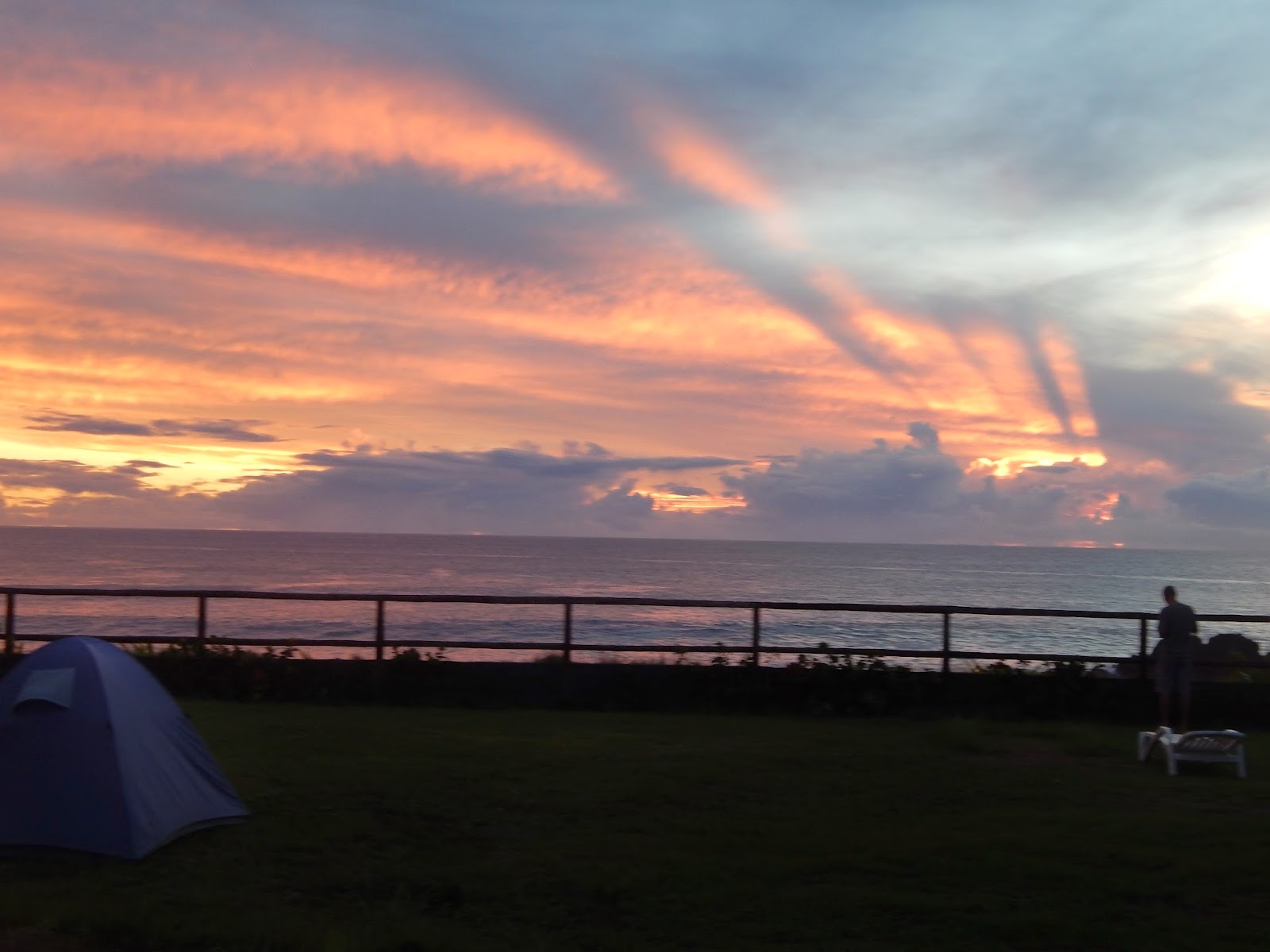
The moai are the main tourist attraction of the island, but it's also beautiful to hike around. The ancient volcanic eruption made it a very hilly place and there is one sandy beach that was created during a tsunami. The weather is tropical: hot and humid, and it's spectacular to watch the waves crashing on the cliffs. I absolutely loved the week that I spent here and felt very lucky to have come!

Friday, 28 February 2014

Uruguay: Montevideo


The capital city of Uruguay is Montevideo, a three and a half hour bus ride from Colonia. On the way, we passed many open fields where cows grazed. Uruguay had bad flooding while I was there (remember the stormy pictures from Colonia), meaning there were mudslides in some areas. I was fine, though, as I stayed very close to the coast. Uruguay is home to many nice beaches (particularly in the Punta del Este area), but I didn't get a chance to visit any.


I stayed in the Old City in Montevideo. A part of the old city wall is still standing, as you can see in my picture. A statue of the Uruguayan hero, Jose Gervasio Artigas, is found in the Plaza Independencia above his grave. He fought for the freedom and independence of the Uruguayan people from the Spanish. In 1811, he led a revolution that defeated the Spanish authorities. He is sometimes called the "Father of Uruguay."


The most happening area in town when I arrived was down at the pier, because it was Sunday, and everyone was out fishing. On the way, I passed many buildings with interesting Spanish architecture, that I haven't really seen before.


When most people talk about the big Carnaval celebration in February, they usually think of Brazil. Bright and colourful costumes, dancing, and parades with big floats are all pictures that come to mind. But Montevideo is also a big party town. Unfortunately, the parades were cancelled because of the rain (the drums they use have a skin on them that is very sensitive to water, so the drums would get wrecked if they were out in the rain). But, I did pass a park that was decorated for the celebration! One positive thing that happened because of the rain, was that the Philharmonic Orchestra held their free concert inside the beautiful Theatre Solis, instead of outside as planned. I had wanted to tour the theatre anyways, but being able to listen to the orchestra was that much more beautiful!


In Uruguay, the most common foods people eat are barbecued meats, especially 'chorizo' (sausage) and 'chivito' (a sort of hamburger often made of lamb, with an egg on top). There were many food trucks at street corners selling these fast foods. To drink, Uruguayans love mate tea. You press tea leaves into a mug, add hot water, and drink it through a metal straw that filters out the leaves. At a museum I saw some really interestingly designed mate mugs.


Because of their open fields that are great for farming and ranching, Uruguay has a history steeped with cowboy tradition, like Calgary. Here, the cowboys are called 'gauchos' and they traditionally wear floppy hats, similar to a French beret, instead of Western cowboy hats. I saw a few in the mountains in Chile leading groups of horses.


With only a week in Uruguay, I didn't get to see a lot. But the time I spent there was very enjoyable. I found it to be a beautiful country with very friendly, laid-back people. Every day I find that my Spanish is improving a little bit more, and everyone I spoke with in Uruguay was really patient with me when I tried to communicate. I was sad to leave, but I had a flight booked already to head back to Argentina. This time, I am moving South, to the southest tip of South America, to be exact!


Friday, 14 February 2014

Uruguay: Colonia


After a quick, hour-long ferry ride, I was across the river and in Uruguay. It was the first country that I'd entered by boat. Because the town Colonia del Sacramento is so close to Buenos Aires, many citizens visit for the weekend. It's a beautiful old town with narrow cobblestone streets and buildings built over 300 years ago.


Uruguay was an area that was fought over between the Spanish (who settled in Argentina, and much of South America) and the Portuguese (who settled in Brazil). You'll notice that Uruguay sits right in between the two. Colonia went back and forth between the Spanish and Portuguese many times, but in the end, the Spanish gained control of it in 1777. Later, Uruguay gained its own independence. (To the right is a picture of the oldest church in Uruguay).


All off the street signs in Colonia are cute tiled pieces
in blue and white.

In Uruguay, I celebrated 200 days of travelling. There have been many ups and downs of the trip so far, but it's amazing to think of all the things I have seen and done. Sometimes you need to persevere through hard times to reach your goals, and although it would have been easy to give up and fly home to a warm, clean, comfortable housemany times, I'm so proud of myself for continuing. I'm also so thankful for the time I have to explore the world!


Argentina: Bienvenidos a Buenos Aires


A 13 hour plane flight brought me to continent # 4 of the trip, South America! I'll be starting in Argentina, then jumping back and forth between the surrounding countries in a way that makes sense with the landscape. Most of South America is Spanish-speaking (the countries that are not include Brazil, where they speak Portuguese, Guyana, where they speak English, French Guiana, where they speak French, and Suriname, where they speak Dutch) and I will only be visiting Spanish-speaking countries.


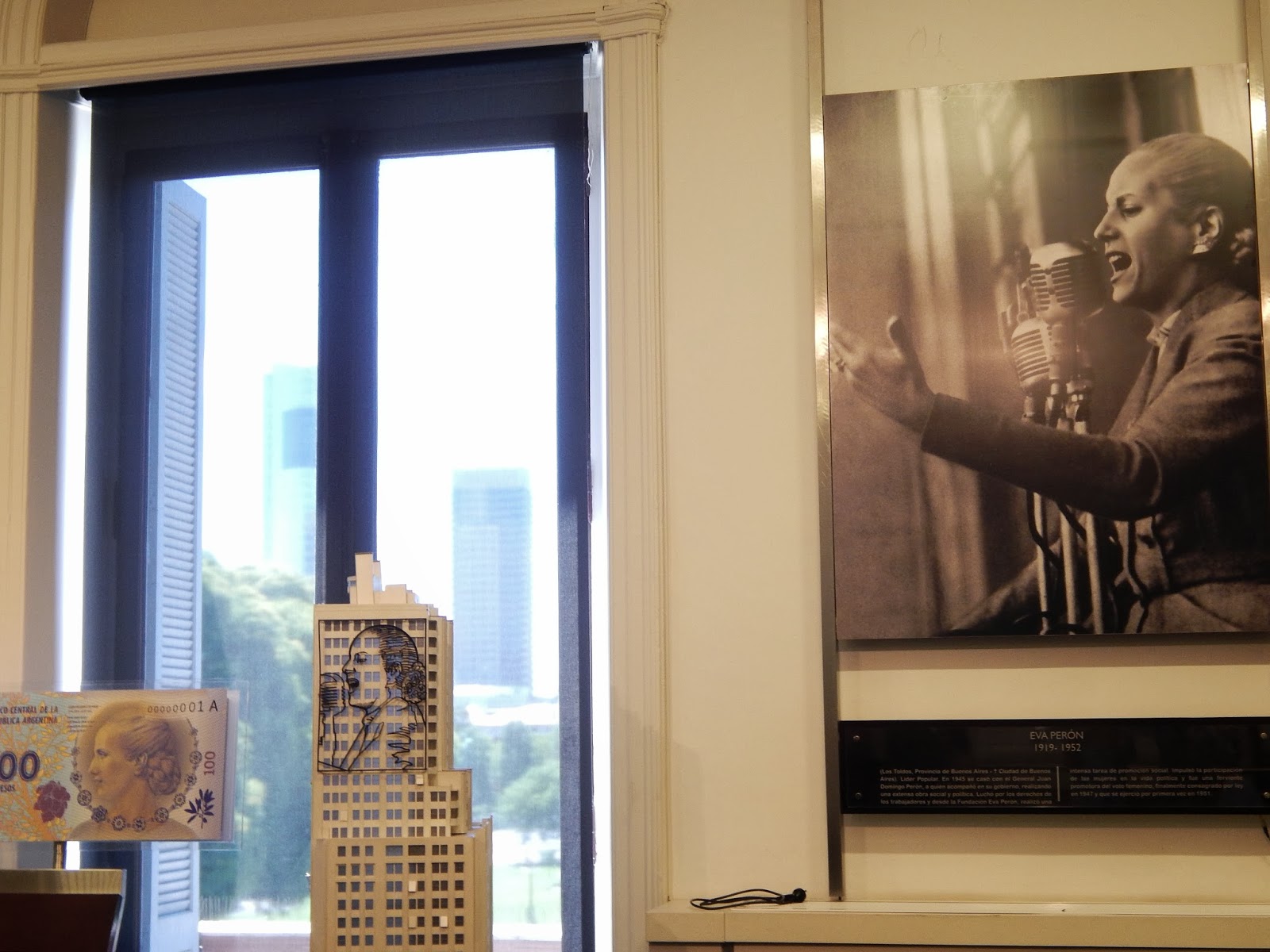
Argentina has a rich history with many ups and downs over the last hundred years. It has survived dictatorships and military takeovers, and was the first country in North or South America to have a female President or Prime Minister. Two of the most famous people in Argentina's history are Juan and Eva Peron, the husband and wife who ran the country in the 1940s. She was a poor child, who became an actress, than climbed the ladder rungs to marry a president and become a leader herself in fighting for suffrage (allowing women to vote) and human rights for poorer classes. She inspired the making of the musical and movie called Evita. I stood on the balcony at Casa Rosada, the house of the Argentine government, where big decisions are made. It's where Juan and Eva Peron gave their many famous speeches from, (and where Madonna sang in the movie, Evita).


I spent two weeks in the capital of Argentina, Buenos Aires, visiting the sites. I stopped by the Recoleta cemetary, where many famous Argentines are buried, including Eva Peron, and strolled through the many parks with large, shady trees. While I was there (in January), the temperature was very hot, usually close to or above 40 degrees C every day, so there were frequent thunderstorms. In the evenings, the storms always cleared and I saw the most beautiful sunsets. Because I was in Buenos Aires for two weeks, I rented an apartment, rather than staying in a hostel, and I really enjoyed being able to cook my own meals, and have my own space again. It's been six months since I've been on the road and I can't believe I'm halfway through my trip!


Wednesday, 1 January 2014

Singapore


I had a sixteen hour layover in Singapore so I was able to leave the airport and get a quick look at the country.


Singapore is a country made up of one small main island, plus smaller offshore islands. The entire country is almost one large city! It was another country that was ruled by England, and it gained its independence in 1963. For a short time after, (less than two years), it joined Malaysia, then became its own independent nation. It has a very high standard of living/good quality of life.

I arrived in the late afternoon so I didn't have a lot of daylight hours. So the first place I ran off to was the botanical gardens, which I'd heard were amazing. Inside is a special orchid garden, which are delicate flowers that like a lot of humidity. That's why they grow so well in Singapore, a very tropical climate.

The orchids were absolutely stunning, and I loved seeing the hybrids that they had created by breeding different kinds of orchids together.


After dinner, I walked down Orchard Road, which is a street with lots of expensive shops and hotels, and I looked at all of their Christmas displays. After five months away from Canada, it felt weird to see familiar stores and restaurants. It was the first Starbucks I'd seen on the trip!

Unfortunately, that was all the time I had in this small country. I would love to go back again to see the harborfront, zoo, and other attractions. The people were exceedingly friendly and the country values being considerate (they don't allow you to drink water or eat on the subway because you might make a mess for the next person, or spill which could cause someone to slip!)

By the next morning, I was back at the airport and on my way to Malaysia!


India: Slum Stereotypes


As I mentioned in my first post about India, there are a lot of people squeezed into this country. There is also a huge difference in the amount of money people have. Lots of Indians live like we do in Canada, in houses or big apartment buildings with electricity and running water. There's even a twenty-eight story single-family home! India is the home of their own Hollywood, like LA in the United States. It's the major city Mumbai that is also called Bollywood, and there are big movie stars who live there.


Embroidery Workshop
But many people are extremely poor and live in very unhealthy conditions on the street or in makeshift housing. That's where big sheets of plastic or aluminum or whatever old construction material that can be found is pushed and strung together to make shelter. Some people live in tents under big highway overpasses, or beside garbage dumps and sift through trash to find recyclable materials which they sell to recycling factories to make enough money for food.

One image we have when we hear about thisaw,,ind of housing is a slum, and there are some pretty bad impressions of what slums are like. But when I was in Mumbai, I took a tour of one of their slums, called Dharavi, and got to see what it is really like!

Paper Recycling
The first thing I learned is what the word 'slum' really means. It stands for any housing that's on government owned land. Most of the slums in India have been created in places close to areas where there is a lot of construction work, like the airport. So technically, the government could come in and tell all those people they have to leave, but that would be over a million people who would be homeless! So for now, they're allowed to stay.

Plastic Recycling


Dharavi is called the 'Five Star Slum' of Mumbai because there is a different section in it where people work and live. We visited the industrial section first (where people work). One of the main industries in the slum is plastic recycling, where they actually collect recycled plastic containers, sort them, chop them up, wash them, dry them, turn them into little plastic pellets, and sell them to a factory outside of the slum where they can turn them into new plastic products. Another is aluminum recycling, where a similar process is completed. The making of soap and pastries are also profitable. Then there were the neighbourhoods of potters and leather-makers. All in all, the streets were no dirtier than most areas in India, the people were very friendly, and the businesses make money. People are very hard-working.

Aluminium Recycling
I do want to be honest, though, of the conditions people are living and working in. Most houses have water pipes running to them, but the government only turns on the water for three hours a day. Almost no one has a bathroom in their home, so they need to share three public toilet stalls with roughly 500 other people. And workers are exposed to many dangerous chemicals and machinery. The population of the slum is also outstanding. In 1.75 square kilometres, over one million people live there.

It was difficult to see so openly the differences between the rich and the poor, and it's not a problem that India alone has. Canada needs to do more, too, to improve the quality of life for our less fortunate. India was the third country on my trip that was having an election while I was there, so once again, I'll hope that the change in government brings a positive change for its most needy.


When flying out of India, I thought about what a great time I had here: all the great food I ate and learned how to cook, the beautiful buildings I saw, and the people who welcomed me. Three weeks was hardly enough time; there are still so many places to go, things to see, and people to meet. I can't wait to come back one day!