Showing posts with label Subject: History. Show all posts

Thursday, 8 May 2014

Chile: An Easter Treat


From the coast of Argentina, it was a 12 hour bus trip back to the Andes. I spent two weeks hiking in El Bolson, then Bariloche, Argentina, before crossing the border into Chile. Chile is a skinny country that stretches from the desert in the North to the End of the World in the South. I was there earlier in the trip when I trekked through Torres del Paine National Park (click here to see my earlier post). They also speak Spanish, and the Andes create a natural border between them and Argentina. Chile's quality of life is similar to Argentina's, but to me it seemed a little bit better. The cities were much cleaner, there were sidewalks, and the National Parks are run very professionally. But to be fair, I haven't seen very much of Chile, so I would need to explore more to make a fair comparison.

I celebrated Easter in the capital city of Chile, Santiago. We met up with two friends from our trip to Antarctica, and rented an apartment together. We cooked a big Easter dinner on Easter Sunday and each called home to our families. Then on Easter Monday, we got a real Easter treat...we boarded a plane and flew to Easter Island!

Easter Island is tiny spot in the middle of the Pacific Ocean. It is the furthest place you can be in the world from somewhere else that's inhabited by people. It's literally in the middle of nowhere! Easter Island was formed over time by three volcanic eruptions and was settled by a group of Polynesians. A few explorers happened upon the island in their travels, the most famous being Captain James Cook in 1774. Easter Island became a part of Chile in 1888.


The native name for the island is Rapa Nui, which is also the name of the language and the people who live there. It is famous for their big rock statues carved to look like humans, called 'Moai.' Researchers have studied the culture of the Rapa Nui people and the moai for many years and they believe that the moai were carvings made to honour village leaders or important people in the village when they died. Their bodies were buried under the platforms, called "Ahu" which the moai stand on.


No one is certain the history of the moai but it is believed that the islanders themselves (the Rapa Nui people) pushed the moai over. It's easy to imagine how shocking it must have been for them to have explorers arrive and they suddenly learned they weren't the only people on the Earth! My favourite group of moai are the Tongariki group, which are 15 in a row on an ahu. These ones are enormous and it is a magical experience to watch the sun rise behind them.


My other faovurite place on the island is Rano Raraku, which is the quarry. A quarry is a big pit where rocks are carved out of the ground. The moai were made from hard volcanic rock. Partially carved figures, mainly heads, still scatter the hillside.


The moai are the main tourist attraction of the island, but it's also beautiful to hike around. The ancient volcanic eruption made it a very hilly place and there is one sandy beach that was created during a tsunami. The weather is tropical: hot and humid, and it's spectacular to watch the waves crashing on the cliffs. I absolutely loved the week that I spent here and felt very lucky to have come!
Saturday, 22 March 2014

Antarctica: The Journey South


Ushuaia is famous for being the city the furthest south in the Americas. It's where the highway that starts in Alaska ends. There is an island further south that you can see on the map, which is a part of Chile, but there are only small towns there, and you need a boat to get around.


But my journey south didn't stop here. After a lot of humming and hawing, and a very fortunate opportunity that arose with a last-minute deal, I booked a ticket aboard an expedition ship sailing for... Antarctica!
The first land we spotted after two days in open water!


Antarctica, the seventh continent, is said to be the only uncharted territory left on Earth. Its harsh conditions and extreme temperatures left it uninhabited by humans (meaning there are no traces of humans having lived there). Its average winter temperature is -60°C! If you consider animals that spend all of their lives on land, the largest animal that lives in Antarctica is an insect that is 3 mm long and spends almost its entire life in the larvae stage. It can be frozen solid and still survive.


Only 2% of Antarctica ISN'T covered in ice. The ice can be 4-5 km thick before you hit earth, and under the layers of ice there are rivers and lakes that no one has ever seen, but scientists have discovered are there. There are currently 7 countries that have claimed a piece of Antarctica as their own, but at the moment no claims are being recognized and Antarctica is a land that is shared.


It took us two days to cross the Drake Passage, which is the body of water you need to sail through to get to Antarctica. As soon as you've passed the latitude line of 60°S, you are in the Antarctic region. On our third day of rocking back and forth, rolling in bed so much that I couldn't sleep, we spotted land and the ship navigated into calmer waters. We spotted whales, seals, and penguins from the deck of the ship.

On the fourth day, we were able to anchor in a bay and climb aboard zodiac boats to set foot on land for the first time.

My first Antarctic landing!

Zipping past icebergs and across a mirrored bay, the view from the boat was breathtaking. Our heads wound around taking in the full panorama of snow-capped mountains and their perfect reflections. The grey sky made it look like another planet and the shore looked like we were entering the polar bear enclosure at the zoo, complete with fake rocks. There was no question about our first landing: we were stepping directly onto continental land, not ice or even snow. The thought of, "I'm standing on Antarctica" was at the front of our minds.


We waddled single-file up a hill to a dome, then spread out to take it all in. Our ship provided perspective for the size of the mountains and other than us, was the only spot of colour in view. Everything was white, grey, and icicle blue.


We celebrated by doing cartwheels, made snow angels, ate snow, and took a group shot. After a half hour, we hiked back down and returned to the ship for breakfast. Everyone ate heartily after two days of seasickness, and the exciting morning activity. It was the first time we'd eaten without struggling against the ship's rolling and we enjoyed being able to carry things in two hands and be served full mugs of tea.


We would be on Antarctica for five days altogether, out of our 10 day expedition, and I hoped every day would be just as exciting!

Friday, 28 February 2014

Uruguay: Montevideo


The capital city of Uruguay is Montevideo, a three and a half hour bus ride from Colonia. On the way, we passed many open fields where cows grazed. Uruguay had bad flooding while I was there (remember the stormy pictures from Colonia), meaning there were mudslides in some areas. I was fine, though, as I stayed very close to the coast. Uruguay is home to many nice beaches (particularly in the Punta del Este area), but I didn't get a chance to visit any.


I stayed in the Old City in Montevideo. A part of the old city wall is still standing, as you can see in my picture. A statue of the Uruguayan hero, Jose Gervasio Artigas, is found in the Plaza Independencia above his grave. He fought for the freedom and independence of the Uruguayan people from the Spanish. In 1811, he led a revolution that defeated the Spanish authorities. He is sometimes called the "Father of Uruguay."


The most happening area in town when I arrived was down at the pier, because it was Sunday, and everyone was out fishing. On the way, I passed many buildings with interesting Spanish architecture, that I haven't really seen before.


When most people talk about the big Carnaval celebration in February, they usually think of Brazil. Bright and colourful costumes, dancing, and parades with big floats are all pictures that come to mind. But Montevideo is also a big party town. Unfortunately, the parades were cancelled because of the rain (the drums they use have a skin on them that is very sensitive to water, so the drums would get wrecked if they were out in the rain). But, I did pass a park that was decorated for the celebration! One positive thing that happened because of the rain, was that the Philharmonic Orchestra held their free concert inside the beautiful Theatre Solis, instead of outside as planned. I had wanted to tour the theatre anyways, but being able to listen to the orchestra was that much more beautiful!


In Uruguay, the most common foods people eat are barbecued meats, especially 'chorizo' (sausage) and 'chivito' (a sort of hamburger often made of lamb, with an egg on top). There were many food trucks at street corners selling these fast foods. To drink, Uruguayans love mate tea. You press tea leaves into a mug, add hot water, and drink it through a metal straw that filters out the leaves. At a museum I saw some really interestingly designed mate mugs.


Because of their open fields that are great for farming and ranching, Uruguay has a history steeped with cowboy tradition, like Calgary. Here, the cowboys are called 'gauchos' and they traditionally wear floppy hats, similar to a French beret, instead of Western cowboy hats. I saw a few in the mountains in Chile leading groups of horses.


With only a week in Uruguay, I didn't get to see a lot. But the time I spent there was very enjoyable. I found it to be a beautiful country with very friendly, laid-back people. Every day I find that my Spanish is improving a little bit more, and everyone I spoke with in Uruguay was really patient with me when I tried to communicate. I was sad to leave, but I had a flight booked already to head back to Argentina. This time, I am moving South, to the southest tip of South America, to be exact!


Friday, 14 February 2014

Uruguay: Colonia


After a quick, hour-long ferry ride, I was across the river and in Uruguay. It was the first country that I'd entered by boat. Because the town Colonia del Sacramento is so close to Buenos Aires, many citizens visit for the weekend. It's a beautiful old town with narrow cobblestone streets and buildings built over 300 years ago.


Uruguay was an area that was fought over between the Spanish (who settled in Argentina, and much of South America) and the Portuguese (who settled in Brazil). You'll notice that Uruguay sits right in between the two. Colonia went back and forth between the Spanish and Portuguese many times, but in the end, the Spanish gained control of it in 1777. Later, Uruguay gained its own independence. (To the right is a picture of the oldest church in Uruguay).


All off the street signs in Colonia are cute tiled pieces
in blue and white.

In Uruguay, I celebrated 200 days of travelling. There have been many ups and downs of the trip so far, but it's amazing to think of all the things I have seen and done. Sometimes you need to persevere through hard times to reach your goals, and although it would have been easy to give up and fly home to a warm, clean, comfortable housemany times, I'm so proud of myself for continuing. I'm also so thankful for the time I have to explore the world!


Argentina: Bienvenidos a Buenos Aires


A 13 hour plane flight brought me to continent # 4 of the trip, South America! I'll be starting in Argentina, then jumping back and forth between the surrounding countries in a way that makes sense with the landscape. Most of South America is Spanish-speaking (the countries that are not include Brazil, where they speak Portuguese, Guyana, where they speak English, French Guiana, where they speak French, and Suriname, where they speak Dutch) and I will only be visiting Spanish-speaking countries.


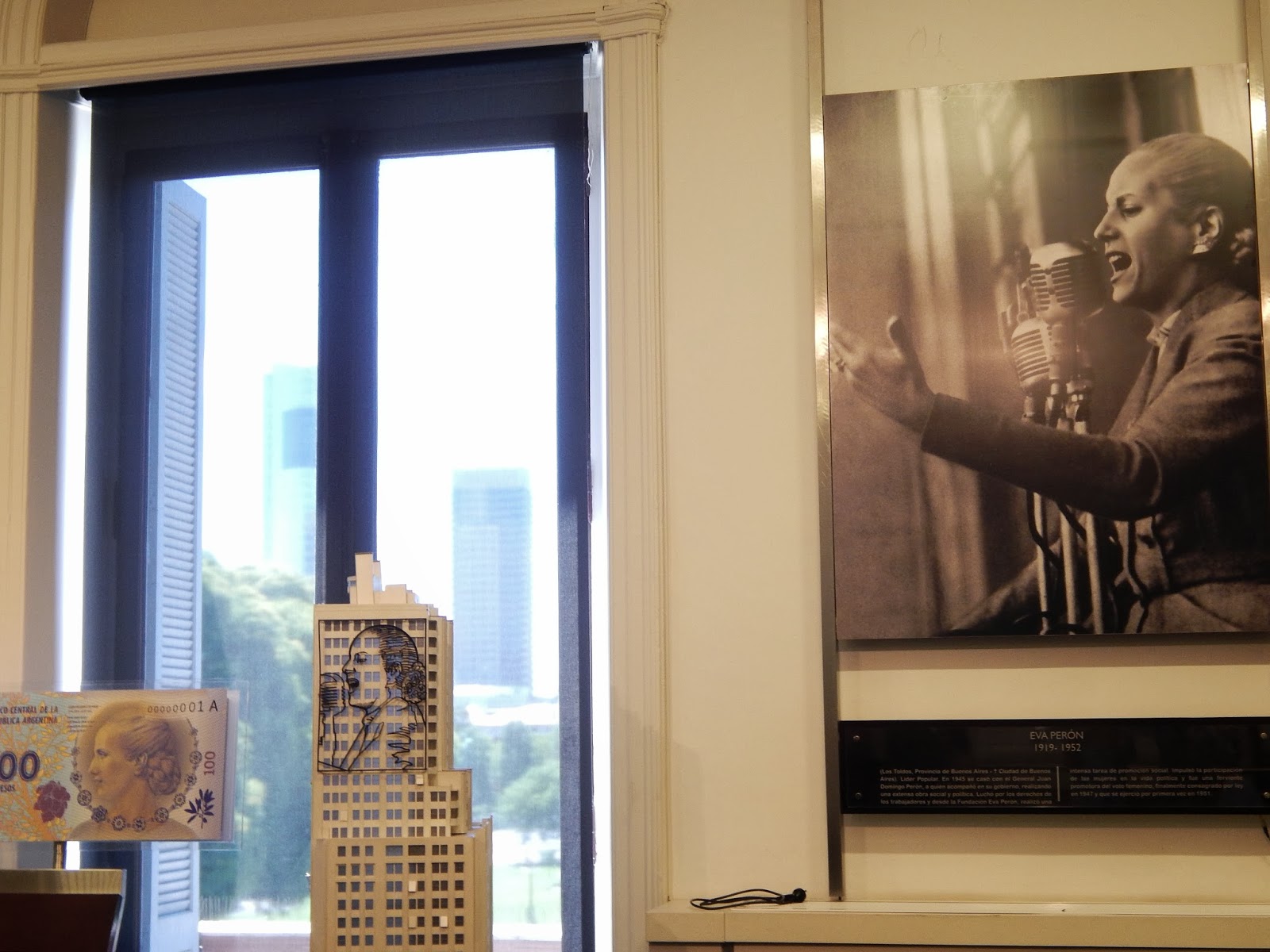
Argentina has a rich history with many ups and downs over the last hundred years. It has survived dictatorships and military takeovers, and was the first country in North or South America to have a female President or Prime Minister. Two of the most famous people in Argentina's history are Juan and Eva Peron, the husband and wife who ran the country in the 1940s. She was a poor child, who became an actress, than climbed the ladder rungs to marry a president and become a leader herself in fighting for suffrage (allowing women to vote) and human rights for poorer classes. She inspired the making of the musical and movie called Evita. I stood on the balcony at Casa Rosada, the house of the Argentine government, where big decisions are made. It's where Juan and Eva Peron gave their many famous speeches from, (and where Madonna sang in the movie, Evita).


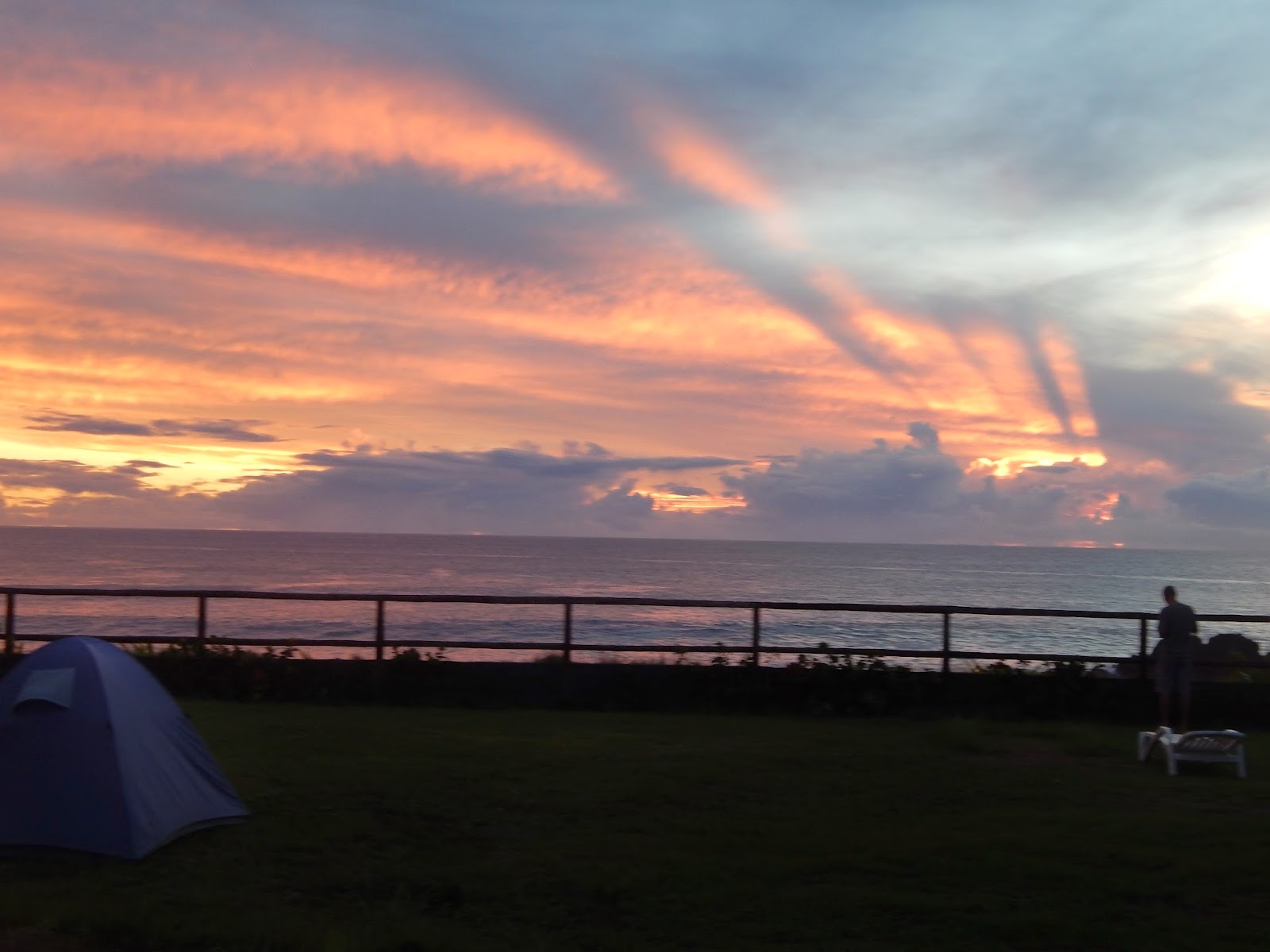
I spent two weeks in the capital of Argentina, Buenos Aires, visiting the sites. I stopped by the Recoleta cemetary, where many famous Argentines are buried, including Eva Peron, and strolled through the many parks with large, shady trees. While I was there (in January), the temperature was very hot, usually close to or above 40 degrees C every day, so there were frequent thunderstorms. In the evenings, the storms always cleared and I saw the most beautiful sunsets. Because I was in Buenos Aires for two weeks, I rented an apartment, rather than staying in a hostel, and I really enjoyed being able to cook my own meals, and have my own space again. It's been six months since I've been on the road and I can't believe I'm halfway through my trip!


Monday, 27 January 2014

Paris: The City of Lights


France is a beautiful country, and five days was not enough time to explore even its capital city, Paris. There is so much history to learn and famous places to explore. I did my best to visit as many sites as I could while enjoying listening to French being spoken around me and soaking in the lovely culture. You'll likely recognize many of the pictures below because so many books and movies are set in Paris.

I visited in January, winter, when the weather is not at its best. It's cold (around 4 degrees C) and rainy most days, but I was lucky enough to have some sun the first two days I was there. Paris was easy to travel around on public transportation and I had the opportunity to speak French many times. Here were my favourite places:


Montmarte
This is the neighbourhood where many famous writers and painters, like Picasso, lived. It's a very creative place with artists in squares trying to sell their work. The neighbourhood is set on a hill, and the views of Paris from the top are beautiful. It's also home to Sacre-Coeur, a large, white, domed church. A cute merry-go-round is set at the bottom of the steps that lead up to Sacre-Coeur.


The Eiffel Tower
I'd seen it in so many pictures and movies but never appreciated how beautiful it really is. At night, it lights up with a soft glow, and every hour, on the hour, for five minutes, it sparkles. I loved looking at it from all views: from Sacre-Coeur, from Trocedero Station, and from right underneath it. It was foggy most of the time I was there, so I chose not to climb it, but it will have to be something I do on my next visit!


Venus de Milo
The Mona Lisa, known to follow
you with her eyes wherever
you are in the room!
The Louvre
The Louvre holds some of the world's most famous works of art, like the Mona Lisa and Venus de Milo. I was also excited to see two original Vermeer paintings after reading Chasing Vermeer two years ago with my Grade Fours. Below is The Astronomer and The Lace Maker. The Louvre itself is a beautiful building with huge archways and grand staircases.


Outside the Louvre:
The Pyramid is where you enter!


The Arc de Triomphe
Napoleon had this huge monument build to honour those who fought for France in the French Revolution and the Napoleonic wars. Along its walls there are the names of great generals inscribed, and underground is the tomb of the unknown soldier from World War One. The arch stands at the centre of a huge roundabout, but there's a tunnel you can walk through that takes you right up underneath it. You can also climb to the top. If you look at how little the cars look next to it, you'll notice how HUGE it really is!

Notre-Dame
You might know this Catholic cathedral from the story, The Hunchback of Notre-Dame, written by the famous French author, Victor Hugo, but it's also well-known for its architecture. Huge, intricately carved gargoyles and statues cover its outside walls, while inside its vaulted ceiling is highlighted by massive stained-glass windows. It's an incredibly beautiful building.


The Seine
Lastly, a visit to Paris would not be complete without a walk along the River Seine. It flows through the city, much like the Bow River in Calgary, and has wide pathways for walking and picnic-ing. Many houseboats and barges can be seen sailing along the river. One of my favourite bridges is the "Love Bridge" where people close locks on the gated side and throw the key into the river to secure their relationships and wishes.


Now, technically, this does not count as another country that I visited on the trip, because you might remember that I travelled through Reunion back in October. La Reunion is one of the islands around the world that France owns and governs. So, at this point, I'll stay at #12. But it is interesting that this is the only country on my trip that I'll be visiting that is in the continent of Europe.


If you're interested in learning more about France, I found this fun website for kids:
http://www.kids-world-travel-guide.com/france-facts.html