Showing posts with label 09. Nepal. Show all posts

Saturday, 19 April 2014

Around the World: How Tall is Tall?

You might be wondering how all of these tall buildings and monuments I've been seeing stack up against each other. Sometimes, things look really big because there isn't anything else around it, or because everything else around it is very short. Sometimes, buildings can look shorter than they are because they're surrounded by really tall things. Here, I'll line them up to show you how tall they really are.

First, let's do a quick review of the standard units of measurement. I like to use a saying to help me remember the metric units:

"King Henry's Daughter Makes Delicious Chocolate Milk"

The first letter of each word stands for a unit of measurement:

Kilometers Hectometers Decameters Meters Decimeters Centimeters Millimeters

Or, in their short forms: km hm Dm  m dm  cm  mm

If you can remember this saying, then you'll remember the order of the units of measurement and easily be able to tell how many of one unit is equal to one of something else. For example, there are 10 mm in 1 cm; there are 10 cm in 1 dm. There are 10 dm in 1 m, and so on.

I will use meters to show how tall these buildings are. If you can picture a meter stick, then you'll have an reference to go by. For me, 1 m is equal to the distance between my feet and my hips.

So, let's take a look at the height of these World Famous Buildings standing side-by-side.


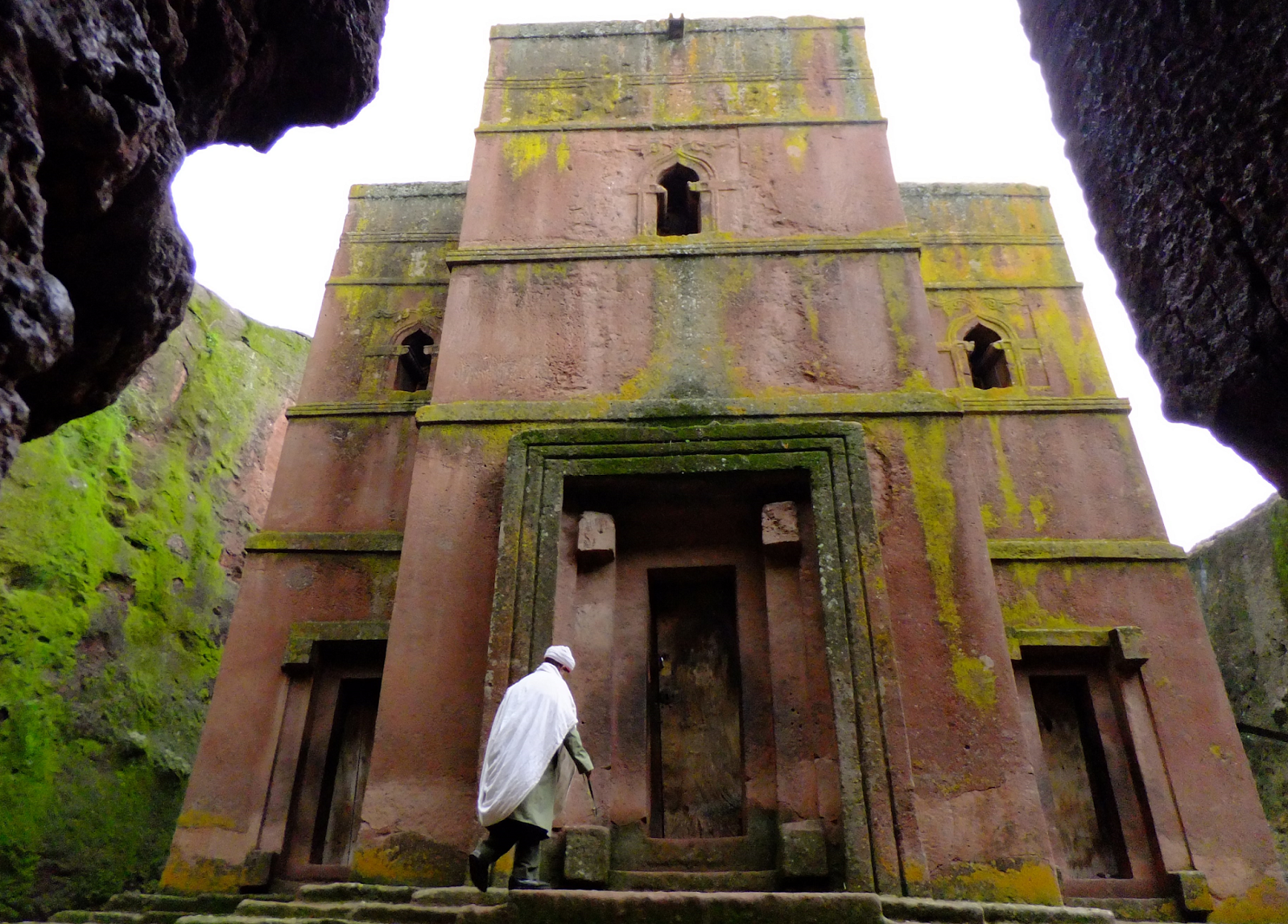
Eiffel Tower, France: 324 m                St George's church, Ethiopia: 12 m


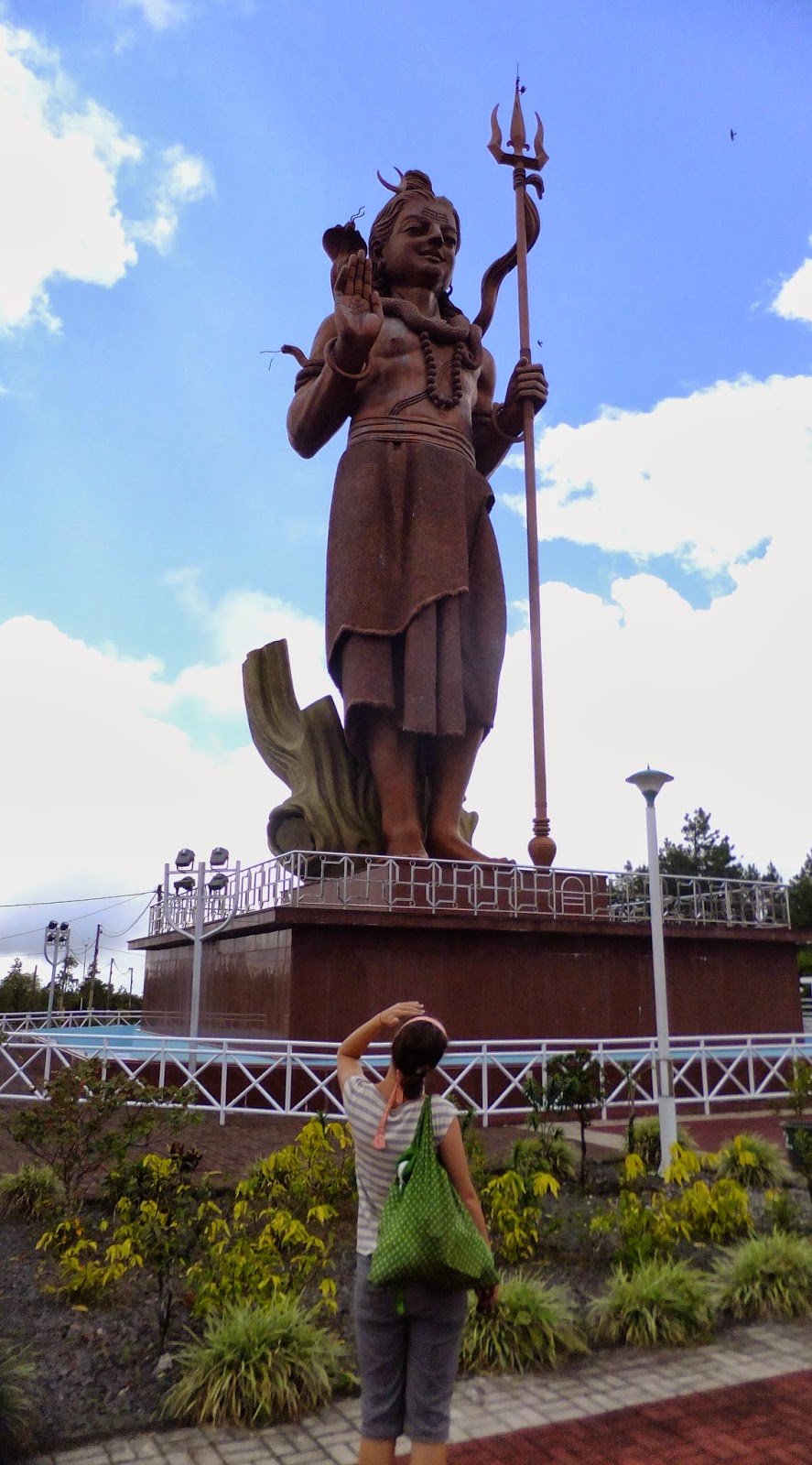
  Faro, Uruguay: 34 m                        Shiva statue, Mauritius: 33 m 


Qutb Minar, India: 73 m                 Calgary Tower, Canada: 191 m


CN Tower, Canada: 553 m                        Taj Mahal, India: 73 m

To see the difference in height between these structures, it would be even easier if we graphed them. I'll start by putting the heights up the y axis (the vertical line), and the names of the structures along the x axis (the horizontal line). Then, I'll use bars to show their heights. Now, I can really see how tall the CN Tower is compared with the other structures!


Organizing information in a graph is a great way to make more sense of it!

Thursday, 21 November 2013

Nepal's Got it All!

Prayer flags at a Buddhist stupa in Kathmandu
As you can see from my other posts and pictures, Nepal is a beautiful country that had so much to offer travellers. The people are very friendly, polite, and humble. Even in the busy shopping district where our hotel was, the shopkeepers would call out hello as we passed, but weren't pushy about us buying things. On our trek, the Nepali people went out of their way to make us feel comfortable. We felt very welcome and safe.

A Hindu temple built in 1690. 


In terms of things to do, Nepal is teeming full of variety. You can trek in the mountains, visit sacred lakes, explore the jungle, and see historical sites in the cities. After spending many days in Kathmandu, I finally got around to see the famous Hindu and Buddhist temples.

With so many positives, it's hard to see a country that's suffering from so much poverty. I saw many homeless people living in the streets, and children out begging instead of being in school. We had to be careful about where we ate because sanitation is a huge concern in Nepal and we didn't want to get sick from someone touching our food who hadn't washed their hands with soap, or our food being contaminated by unclean water.

The Buddhist temple, Swayambhunath,
also named "Monkey Temple" because many
monkeys live there and are considered holy.
According to the Central Intelligence Agency, Nepal ranks 177 out of 195 countries in the world for average income, making it the second poorest country in Asia (behind Afghanistan). An approximate 7 million Nepalis lack adequate food, basic health care, and education. Mr Elder and I have been looking into charities that support building schools in Nepal and supporting people in earning their own income to improve their quality of life.

We once again found ourselves in a country undergoing a huge moment in their history. The second democratic election Nepal has ever had took place near the end of our trip here. We hope that the results will help put the country on the right path to building a positive future for its people.

Wednesday, 20 November 2013

Nepal: The Heart of the Jungle


The view from the drive to Chitwan National Park

Nepal is more than just mountains when it comes to landscape. Just five hours south of Kathmandu, close to the border with India, is the Chitwan National Park. It's near 1000 square kilometer jungle is full of forests, grasslands, and marshes. Chitwan actually means "the heart of the jungle" and it's one of the best places in Asia to see wildlife.

We spent a quick two days here hoping to see some of the protected animals. We also learned a bit about the Tharu people and took in a cultural show.


The evening we arrived, we saw the traditional homes the villagers live in, round thatched roofs and walls made from bamboo and mud. Then, we were treated to an hour-long traditional dance performance. The highlights were the stick dances. For men, this dance prepares them for fighting their enemies, and for women, it celebrates the end of the rice harvest. There was also a dance to honour the wild peacock that's found in the park. It was entertaining and the costume was exquisite.


Then early the first morning, we set out by canoe on the Rapti River. The air was chilly, but the river water was warm, meaning that mist formed and hung above the water. It was absolutely magical. Our guide pointed out many birds, deer, and crocodile found around the river's edge.


All was silent except the early morning sounds of the animals as we paddled down stream. Around the bend in the river we made out a figure on the pebbled cove of a small island. It turned to look at us, and through the mist, we saw a Royal Bengal tiger. With a flick of its tail, it sunk down into the tall grass and disappeared so quickly we aren't able to get a picture, but we were incredibly fortunate to have seen this shy and rare creature!

In the afternoon, we headed out on a jeep safari, where it was less magical, but we were able to see more of the forest. We stopped at the breeding centre for gharial crocodiles, which are endangered. They breed them here and release the young ones into the wild. They have long snouts mashed full of teeth for catching fish.

In the jungle, we were also fortunate to find endangered one-horned rhinoceroses, especially this mother and her baby!


And we didn't even need to go into the forest to see this python that had wandered into someone's home right beside our hotel bungalow! The villagers worked together to capture it into a bag and return it to its natural habitat.

Another Magical Nepali Experience

Tuesday, 19 November 2013

Nepal: The Festival of Lights


By chance, our time in Nepal fell over the Festival of Lights, called Deepawali, or also called Diwali. It's a festival celebrated by Hindus all over the world. Many of the people in the countries we're visiting follow the religion of Hinduism, such as in Mauritius, Nepal, India, and Malaysia, so I was excited to see this beautiful festival and learn more about the colourful religion. Here are a few things that I learned.

Deepawali takes place each year between mid-October and mid-November depending on the phase of the moon and the Hindu calendar. It lasts five days, and each day carries its own significance.

In Nepal, the first day worships the crow, and offerings are made because they are seen as divine messengers. On the second day, dogs are given food and are worshipped for their honesty. The third day is when Lakshmi, the goddess of wealth comes to visit homes that have been lit up. People place burning candles outside their doorsteps leading inside homes and businesses to welcome her in. The fourth day is the first day of the New Year, and the fifth day is a special day where brothers and sisters meet and exchange gifts. It was difficult to find stores and restaurants that were open this day because it was a day to visit families.

Throughout the festival, children go carolling in the evenings and receive gifts of money, rice, and fruit. They donate some of the money they receive to charity after the festival, and use the rest to go on a family picnic.

It was such a beautiful festival with colourful flags hung, and paintings done on the street out of grains of rice, seeds, glitter, and, of course, paint.


Mr Elder getting blessed and receiving a tika by a Hindu priest.
It represents the 'third eye' and is a sign of protection.

Nepal: A Lesson on Perseverance


Teachers are always talking about 'perseverance,' right? It's often something commented on for report cards, and we ask you to reflect and assess for it yourselves. But this time, I'm the one who had to demonstrate it.

My eight day trek in the Himalaya mountain range started as expected. It was tough - steep uphill climbs in high altitude areas, but the views were fantastic, and I was proud of what I was accomplishing.

My water was frozen in its bottle when I woke up!
But by Day Four, my spirits were lessening. Each day had been a steep climb to higher elevation, and with it, the temperature dropped and the wind grew. The teahouses we stayed in were little more than planks of wood nailed together, so they didn't do much to keep the wind out at night. I huddled inside my sleeping bag in multiple layers of clothing to try to stay warm enough to sleep. The toilets were squat - a hole in the ground usually in a separate building outside of the sleeping house, and shared with twenty other people. The worst ones had ice all over the ground around them so you had to be really careful. Basically, I was feeling drained.

Day Four was the toughest of all. It was the day we had to climb up and over the mountain pass. It was probably -15 degrees C and snowing, which I was not prepared for with my thin wool mittens and gortex raincoat. But I had my eyes trained on what looked like the peak above me so I gritted my teeth and kept going. When I reached that peak, I was able to see the path beyond, not down to the other side, as I had hoped, but further up, into the windy, snowy pass. I'd say, 'I just about cried,' but that would be a lie... I did cry a little. It looked like so much further to go, and my hands were so cold already I couldn't move them, and it was slippery, and the elevation was so high that it was hard to catch your breath before the biting wind whipped it away... I thought I was going to collapse in the snow in a full-blown panic attack. But then I had a tiny little thought as I looked up: I was hiking through a mountain pass in the HIMALAYAS. The highest, most unforgiving mountain range in the WORLD! This wasn't Everest, but Everest wasn't that far away from us! It was SUPPOSED to be hard!!!

Plus, I had started this strategy back in Calgary, six months before I left for the trip. I was worried that the gorilla trek in Uganda was going to be really hard, so I tried finding hikes to do in the Rockies that were really steep as a way to practice. And when it got hard, I'd chant to myself, in my head, "Gorillas, Gorillas, Gorillas" for motivation. It really worked! So after the gorilla trek, I realized that I needed a new goal, and the trek through the Himalaya seemed like the perfect one. So all through Madagascar, every time we'd go for a hike, and things got difficult (like our Peak Boby trek!), I'd chant in my head, "Himalaya, Himalaya, Himalaya."

So here I was, trying to make it through this mountain pass, when a tiny voice in my head said, "Himalaya, Himalaya, Himalaya," and I realized that I had been preparing for this for the past two months. I KNEW it was going to be hard - really hard, and I had done other treks to prepare myself for it. So yes, it was going to be really difficult for a little bit longer, but then I would make it. I would get to the other side. And that made me smile and keep going.


Plus, there was another little voice in my head that tried to be rational. It said, "What do you want to happen here? If you sit down in the snow and cry, your guide is going to think that you can't do this, and you'll have to go back down the way you came, back to the beginning of the trek. Is that really what you want? Or, you could go just a little bit further, and the hard part of the trek will be over, and you will get to go down the other side." That voice was pretty smart.

We made it! With our guide, Surendra, and porter,
Niraj,at the end of the day's hike.
Now, I'd like to say that it was that easy, that I finished the pass, and the rest of the day hiking without any other moments where I wanted to give up. But truthfully, about five minutes later, I was in tears again when I slipped on some ice and fell on my shoulder. And then again ten minutes after that when my hands were so cold I had trouble using my poles and I was worried I might slide down the slope. But, I did it. And I can hold on to that moment of good perseverance for future struggles to come. Then the best thing of all? Despite it being so difficult, and feeling a little embarrassed about not handling it better, it is now one of the things I am the most proud of myself for ever doing.

Relaxing with a game of cards after the hike.
We used pistachio shells as a way to keep score!

Nepal: Trekking in the Himalaya

The view from the bus to Dhunche
To get to Langtang National Park, we had to take an eight-hour bus ride, much like the buses we experienced in Madagascar - old, broken-down, and cramped full of people. There were frequent stops to let people from the aisle head up on top of the roof of the bus. Some even jumped aboard and climbed up there while the bus was moving! We were thankful we had paid a bit more to book actual seats so we at least had a bit of room for ourselves and all our luggage. At one point, the radio playing Nepali and Indian music throughout the bus started blaring one of our favourites: Jai Ho, from Zumba! It definitely got me bouncing in my seat! :)


As more and more people came aboard we were squished between them and their belongings. People were friendly, though, and we tried to make room under seats for bags and such. One woman asked me if I would be willing to help her with her load - and gave me her baby to hold!


After eight hours, we arrived in the town of Dhunche, where we would start our trek. The first day proved to be a model for all of the other days - either straight up or straight down was the norm (often both in one day, over and over again). It was nothing short of gruelling. But the views were diverse and outstanding! Here are some of my favourites:

The view starting our hike from Dhunche
Hiking up, up, up!

It's autumn in Nepal now, too.

A typical Nepali mountain house.

Lunch at a teahouse on the trail.

The Prayer Flags hanging from a temple.

One of the nicer teahouses we stayed in.

We think this is a Mountain Eagle.

At a hilltop Buddhist stupa.


The Hindu sacred lake, Gosaikunda.