You might remember our school musical from two years ago,
Dig It. At the beginning, a skeleton name Lucy showed the two kids the history of human kind starting in Ethiopia. That's because our earliest human ancestors were from there, and it's where the oldest human skeleton fossils have been found. It seemed like the best place to start my journey, so on Day 1 of my trip, I visited the real "Lucy" at the National Museum in Addis Ababa, the captial of Ethiopia.
Her skeleton was found incomplete (left), so they used scientific analysis and digital reconstruction to recreate what they think the rest of her skeleton looked like (right).
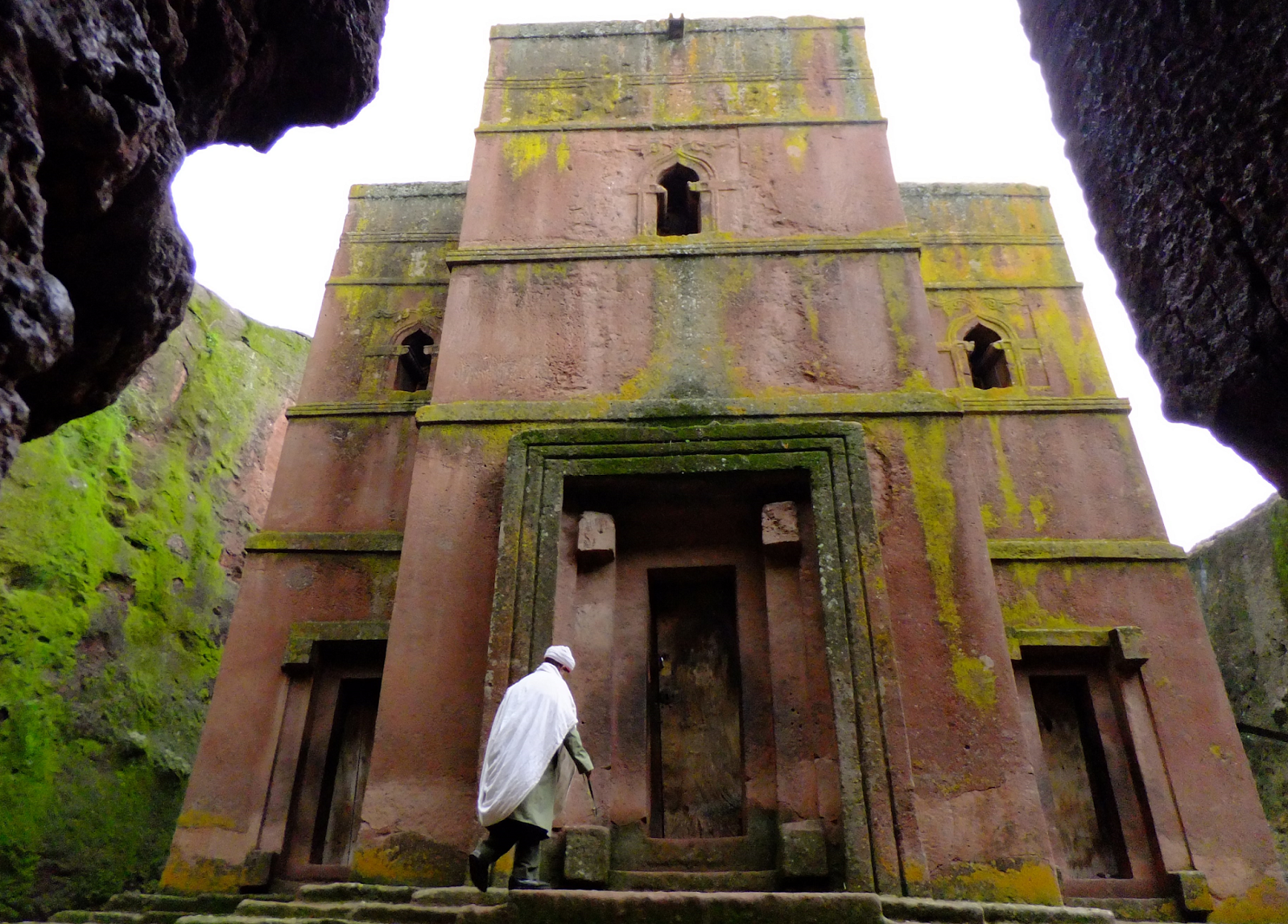
The people in Ethiopia are very religious (with half being Christian and half being Muslim). They get along very well and each respect the other's holy days and traditions. Because Ethiopia is such an old country, it has some of the world's oldest churches. On Day 3 of my trip, I visited some gorgeous churches carved out of stone in a town called Lalibela. These churches are over 900 YEARS old! Notice how they carved the rock away, and how amazing the detail is.
In Lalibela, I was also very lucky to get to see their weekly Saturday market. It was a lot like our farmer's markets but much bigger, and you could buy everything from food to house supplies to live animals! People from the surrounding villages and farmers from the countryside walk a very long way to come to the market. They sell whatever goods they have, or trade for what they need.
At night time, people have the doors of their houses open and they like to visit with friends and family. I could see into their houses and most people had a couple of plastic chairs (like patio furniture), and a table. Many sleep on thin mattresses on the floor. Here is a picture of a typical house in Ethiopia:

Ethiopia used to have a royal family. On Day 6, I visited the city named Gondar to see some of the castle ruins from the days of Kings and Emperors. People call Gondar "Camelot" because the castles look like the mythical land of King Arthur.
These baths (left) were built originally to treat one of the king's skin condition. After his time, and nowadays, they are used during religious festivals. The pool is filled up to the pathway that you see, and rickety wooden stadium seating is set around the wall. As you can see, the trees have started growing into the wall.
Gondar is surrounded by mountains that are lush and green because it is currently the rainy season. I went for a hike to find gelada baboons, a type that can only be found here in Ethiopia. We found them on a cliff side. Farm children sit all day long yelling at the baboons to keep them away from their fields because they will eat the crops.

I also saw colobus monkeys, which look so cool when they jump! We have a couple at the Calgary Zoo that you might remember seeing on our field trip.

Lasting Impressions:
* Ethiopians are very friendly and welcoming to tourists. I always felt safe.
* I had an image of Africa that was very dry and barren. Now I know that it can be very beautiful and lush in the rainy season. Ethiopia has a lot of rivers and big lakes.
* There are many ENDEMIC species in Ethiopia. This means there are lots of animals that are only found here in the wild (like the gelada baboons).
* Even in the rainy season some places (like Gondar) experience water shortages and power outages frequently. One day I had to bathe with a bucket of cold water!
* Children seem to love school and like practising their English. They knew that Canada's capital city was Ottawa and that Toronto and Vancouver are our most major cities. They would get huge smiles when they saw tourists and yell "hello" and come shake our hands to welcome us.
Games I Saw Children Playing:
* pool, foosbal, and ping-pong
* marbles
* hoop and stick
* sledding down dirt piles on whatever they could find (I saw a few kids on old toilet lids!)
This picture is from a traditional restaurant where I got to watch people show the different dances of Ethiopia's 13 regions. One of the dancers came over and pulled me up to try dancing...it was really hard to do the "shoulder shake" dance!
At a lake in Debre Zeyit.





.jpg)


