Showing posts with label 10. India. Show all posts

Saturday, 19 April 2014

Around the World: How Tall is Tall?

You might be wondering how all of these tall buildings and monuments I've been seeing stack up against each other. Sometimes, things look really big because there isn't anything else around it, or because everything else around it is very short. Sometimes, buildings can look shorter than they are because they're surrounded by really tall things. Here, I'll line them up to show you how tall they really are.

First, let's do a quick review of the standard units of measurement. I like to use a saying to help me remember the metric units:

"King Henry's Daughter Makes Delicious Chocolate Milk"

The first letter of each word stands for a unit of measurement:

Kilometers Hectometers Decameters Meters Decimeters Centimeters Millimeters

Or, in their short forms: km hm Dm  m dm  cm  mm

If you can remember this saying, then you'll remember the order of the units of measurement and easily be able to tell how many of one unit is equal to one of something else. For example, there are 10 mm in 1 cm; there are 10 cm in 1 dm. There are 10 dm in 1 m, and so on.

I will use meters to show how tall these buildings are. If you can picture a meter stick, then you'll have an reference to go by. For me, 1 m is equal to the distance between my feet and my hips.

So, let's take a look at the height of these World Famous Buildings standing side-by-side.


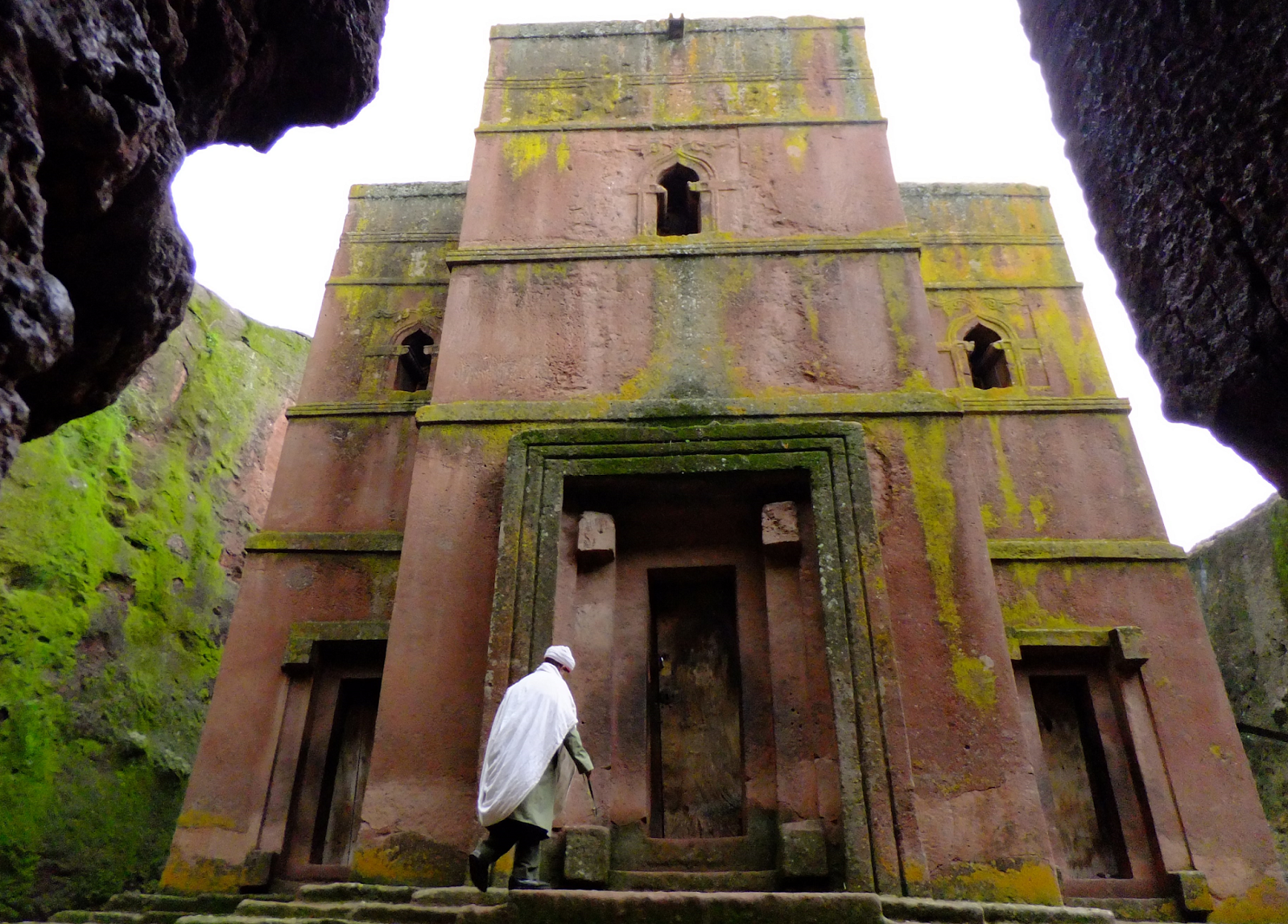
Eiffel Tower, France: 324 m                St George's church, Ethiopia: 12 m


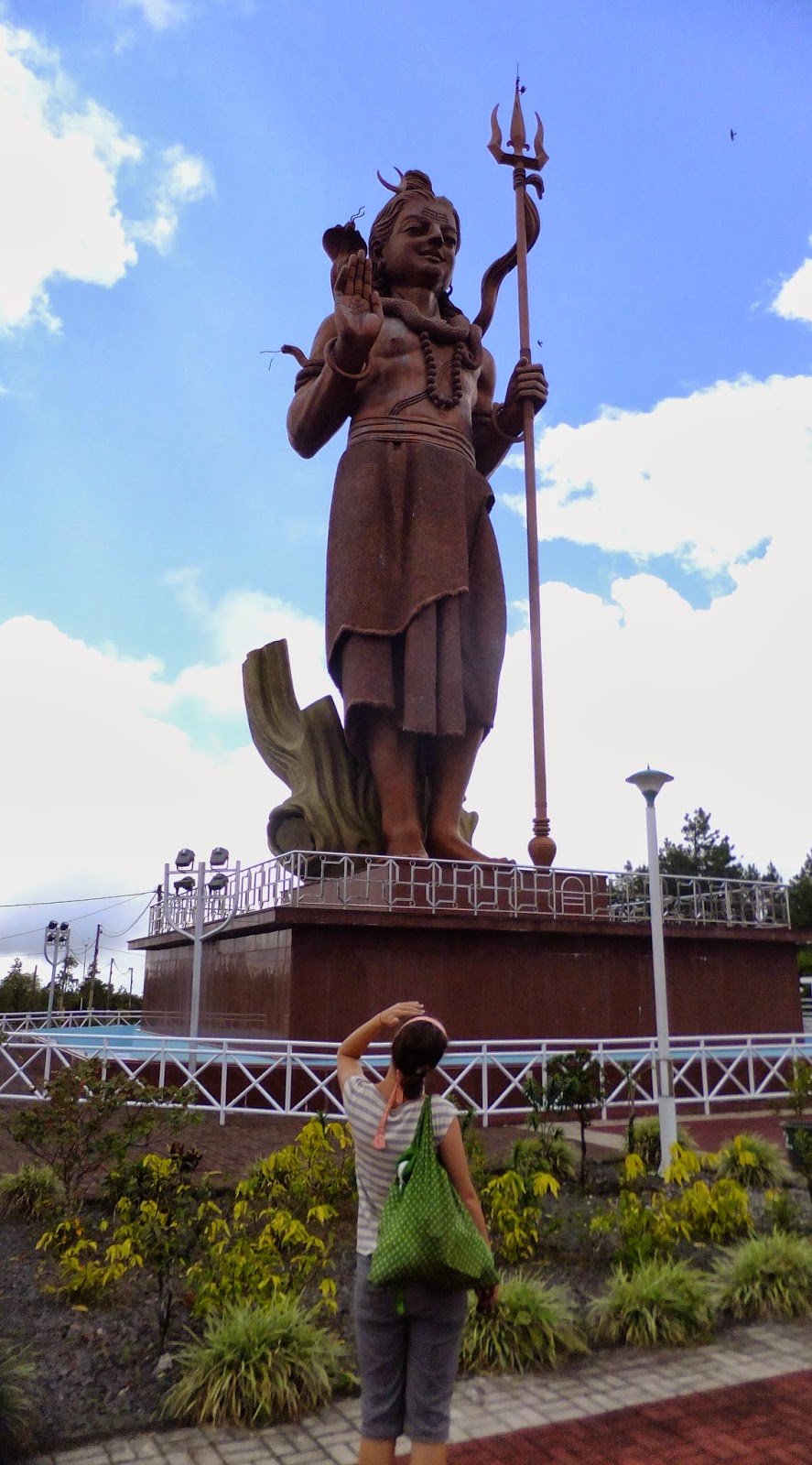
  Faro, Uruguay: 34 m                        Shiva statue, Mauritius: 33 m 


Qutb Minar, India: 73 m                 Calgary Tower, Canada: 191 m


CN Tower, Canada: 553 m                        Taj Mahal, India: 73 m

To see the difference in height between these structures, it would be even easier if we graphed them. I'll start by putting the heights up the y axis (the vertical line), and the names of the structures along the x axis (the horizontal line). Then, I'll use bars to show their heights. Now, I can really see how tall the CN Tower is compared with the other structures!


Organizing information in a graph is a great way to make more sense of it!

Wednesday, 1 January 2014

India: Slum Stereotypes


As I mentioned in my first post about India, there are a lot of people squeezed into this country. There is also a huge difference in the amount of money people have. Lots of Indians live like we do in Canada, in houses or big apartment buildings with electricity and running water. There's even a twenty-eight story single-family home! India is the home of their own Hollywood, like LA in the United States. It's the major city Mumbai that is also called Bollywood, and there are big movie stars who live there.


Embroidery Workshop
But many people are extremely poor and live in very unhealthy conditions on the street or in makeshift housing. That's where big sheets of plastic or aluminum or whatever old construction material that can be found is pushed and strung together to make shelter. Some people live in tents under big highway overpasses, or beside garbage dumps and sift through trash to find recyclable materials which they sell to recycling factories to make enough money for food.

One image we have when we hear about thisaw,,ind of housing is a slum, and there are some pretty bad impressions of what slums are like. But when I was in Mumbai, I took a tour of one of their slums, called Dharavi, and got to see what it is really like!

Paper Recycling
The first thing I learned is what the word 'slum' really means. It stands for any housing that's on government owned land. Most of the slums in India have been created in places close to areas where there is a lot of construction work, like the airport. So technically, the government could come in and tell all those people they have to leave, but that would be over a million people who would be homeless! So for now, they're allowed to stay.

Plastic Recycling


Dharavi is called the 'Five Star Slum' of Mumbai because there is a different section in it where people work and live. We visited the industrial section first (where people work). One of the main industries in the slum is plastic recycling, where they actually collect recycled plastic containers, sort them, chop them up, wash them, dry them, turn them into little plastic pellets, and sell them to a factory outside of the slum where they can turn them into new plastic products. Another is aluminum recycling, where a similar process is completed. The making of soap and pastries are also profitable. Then there were the neighbourhoods of potters and leather-makers. All in all, the streets were no dirtier than most areas in India, the people were very friendly, and the businesses make money. People are very hard-working.

Aluminium Recycling
I do want to be honest, though, of the conditions people are living and working in. Most houses have water pipes running to them, but the government only turns on the water for three hours a day. Almost no one has a bathroom in their home, so they need to share three public toilet stalls with roughly 500 other people. And workers are exposed to many dangerous chemicals and machinery. The population of the slum is also outstanding. In 1.75 square kilometres, over one million people live there.

It was difficult to see so openly the differences between the rich and the poor, and it's not a problem that India alone has. Canada needs to do more, too, to improve the quality of life for our less fortunate. India was the third country on my trip that was having an election while I was there, so once again, I'll hope that the change in government brings a positive change for its most needy.


When flying out of India, I thought about what a great time I had here: all the great food I ate and learned how to cook, the beautiful buildings I saw, and the people who welcomed me. Three weeks was hardly enough time; there are still so many places to go, things to see, and people to meet. I can't wait to come back one day!


Monday, 9 December 2013

India: A Royal Past


India's history is rich with stories of maharajahs (kings) and maharanas (queens). As I've travelled through Rajasthan, I've stopped in many cities and visited their impressive forts and palaces. They are each built in their own unique way, showcasing the time they were built and the influences the builder had from other styles of architecture.


The Royal Gardens at Amber Fort

First was Amber, outside the city Jaipur. The fort was started in 1592 by Maharajah Man Singh. The royal family there reigned for over 800 years! The fort is set on a high hill looking over the beautiful Lake Maota. It has four main sections, which each have their own courtyard. The first, Jaleb Chowk, is the main courtyard where soldiers would show off their loot when they returned from battle. Carved marble screens above the courtyard let women see the action because they weren't allowed in that area (only men were).


The Jai Mandir (Hall of Victory) was the most impressive because of its mirrored walls and ceiling.


After Jaipur, I visited Pushkar and saw its market and ghats (see my previous post), then it was on to Jodhpur. Jodhpur is called the Blue City because many of the buildings in the old, and new, part of town are painted blue because of religious significance. The blue paint is also supposed to repel insects. But when entering the city, I assure you that your eyes won't be noticing the colour of the walls... Your gaze will instead be drawn upwards.... and upwards... to the towering fort above you, Mehrangarh.


Despite the fact that the royal family no longer governs India, this fort is still run by the Jodhpur royals. It houses many royal artifacts, like a collection of elephant howdahs (chairs that sit on top of an elephant for royal family members to travel in style). You can see the rooms decked out as they were hundreds of years ago with stained glass windows and mirrors. The fort was first built in the year 1808.


An Elephant Howdah

The Maharajah's chair in the Royal Entertainment Room

Udaipur was next, a beautiful city built around a lake with buildings that seem to rise up out of the water. The fort, Kumbhalgarh, is found two hours outside of Udaipur in the hills. It's known for having the second longest wall in the world, after the Great Wall of China. Unlike Mehrangarh, it is empty of artifacts, so we visited it to see its impressive views over the hills and a sand-duned desert. It was also great exercise to walk up the windy pathway and through the four gates that helped keep this royal family safe.

The wall is wide enough that eight horses can ride side-by-side!

We unfortunately didn't have enough time to visit the city Jaisalmer, which has its own interesting design. Look it up online; it looks like a giant sandcastle!

As I'm learning more about India's history as I go, I can see how it's steeped with pride and honour. The buildings help you realize what life would have been like hundreds of years ago, and little details teach about the culture.


For example, I noticed beautiful peacock designs used in many of the palaces and learned this noble creature is India's National Bird.


Elephants are a symbol of royally and were used by the royal families in celebrations, as well as during war. Many of the buildings have scenes with elephants fighting or dancing carved into pillars.

Over the last couple of hundred years, the Royal Families have lost all but their ceremonial powers as India has transitioned into becoming the world's largest democratic country. 

Sunday, 8 December 2013

India: The Great Bazaar

A Snake Charmer!
I've enjoyed wandering through the markets in India with all their food stands of sizzling deep fried snacks and saris and bangle bracelets.

One of the things I love most about India is the clothing. Women usually wear saris or a salwar kameez. Saris are long pieces of fabric, usually silk, between 5 m and 9 m long, and 1 m wide. They are folded, wrapped and tucked around the woman without the need for pins or buttons. They come in every possible colour and make the streets of India alive with brightness.


A salwar kameez is another common choice for women, which is a dress-like tunic (or long shirt) worn over pants. Some men still wear the traditional dhoti, which is like a loincloth, pulled up loosely between the legs, but it's more common to see men in cities wearing dress pants or jeans with a button-up dress shirt.

I noticed that in Delhi, more women wore pants and long-sleeved shirts like women do in Canada, but in the smaller towns, saris seen to be the norm. You'll notice in my pictures that I've tried to dress conservatively to respect the Indian culture, either by wearing long skirts or pants with loose-fitting tops. I also generally carry a shawl with me, which is common.


Pushkar, where these photos were taken, is a city between the larger cities Jodhpur and Jaipur. It is most known for its ghats, or holy bathing areas. Hindus will visit Pushkar to bathe in the lake that they believe cleanses the body. You can see wet saris spread out to dry in the sun after people have washed in the sacred water. One of the ghats is famous for being a place where Gandhi's ashes were spread.


Pushkar's Ghats

Sunday, 1 December 2013

India: The Land of Spice

Throughout India, much like the huge variety of languages people speak, different regions are known for different specialities. Curries, Dahl, Tandoori, and Naan, India is know for its food, and fulfils its reputation of being the 'Land of Spice.' Here are a few basics to help you figure out a menu at an Indian restaurant.

Rice: the base for most Indian dishes, particularly those from the South. It comes in a wide variety, from Assam's sticky rice to Kerala's red grains. The most popular, though, is basmati, a long-grained rice exported to many other countries.

Roti: thin flatbreads, also called chapati that accompany many Northern Indian dishes. You can use it to scoop up the food or put vegetables inside and roll it, kind of like a crepe.

Dahl: all throughout India (and Nepal), this is a staple. It's made from cooked lentils of all colours, split peas, or beans, like kidney or black-eyed peas. It can be eaten on its own or scooped onto rice with curried vegetables.

Vegetables: are found in almost every dish! Many Indians are vegetarian, so vegetables are prepared in many ways to provide variety. They can be cooked sukhi (dry) or tari (in a sauce) with spices, and can be fried, curried, baked, roasted, mashed... you name it! Common ones I've seen are potatoes, cauliflower, onions, carrots and peas.

Tandoori: despite the many vegetarians, there are several popular meat dishes called 'Non-Veg,' mainly made from chicken, lamb, and goat. Tandoori is my favourite, cooked in a tandoor, or clay oven, that's from areas in Northern India.

Spices: dishes can come from mild to hot, but you'll notice that they all have a lot of flavour! Common spices are chilli, curry, cumin, turmeric, pepper, and various masalas.

In India, it's common to eat with your hands, or more specifically, your right hand only. You can use the bread as a kind of shovel to help get the food into your mouth.


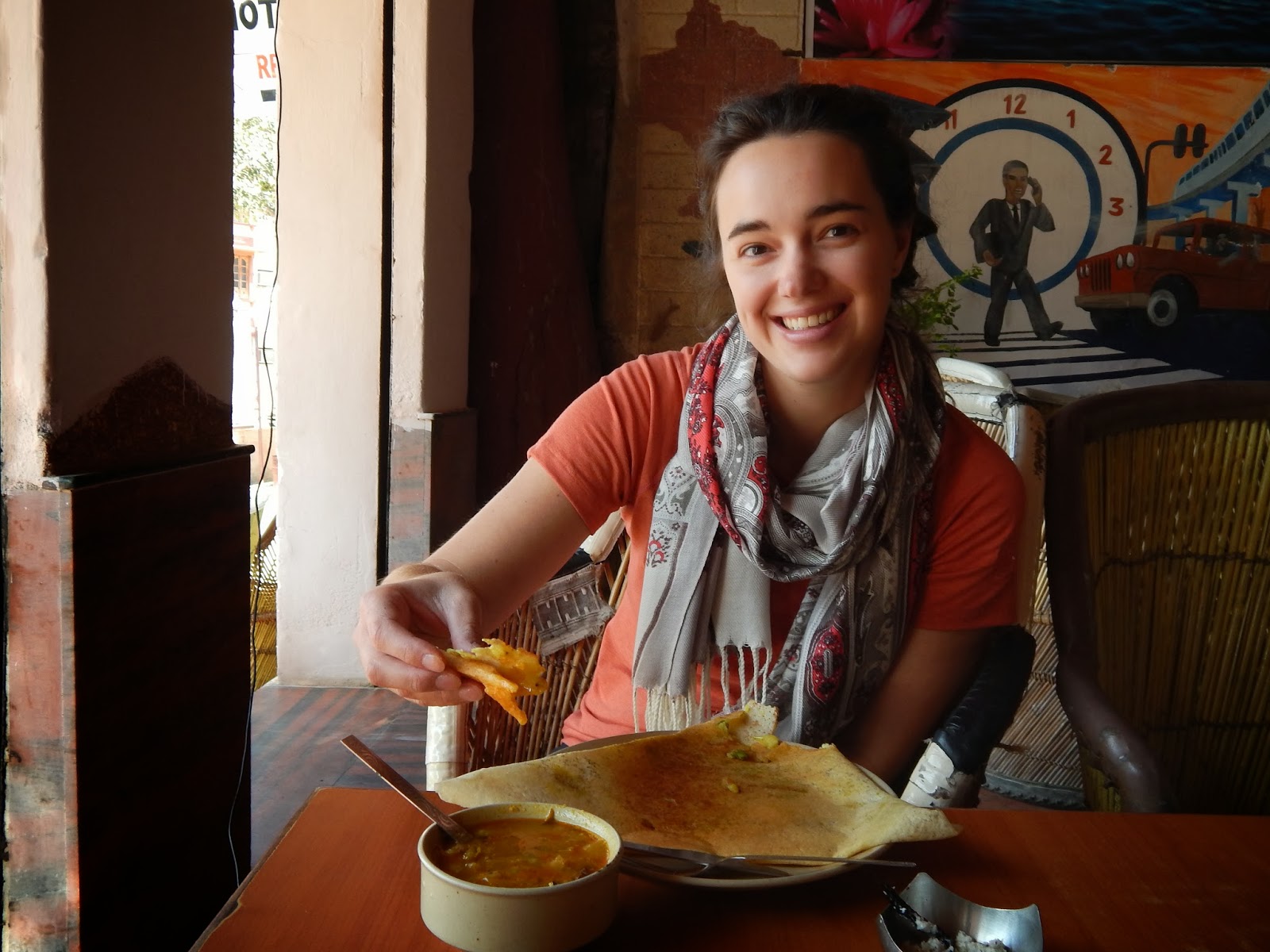
There's no better way to learn something than by doing it, so not only have I dove in to all kinds of new food, but I also tried my hand at a cooking course. It was a ton of fun, and I'll arrive back home with the new recipes to add to my cookbook! Here's a look at my new cooking skills in action!

Dahl: We cooked mixed lentils, made a garlic-onion-ginger-chilli paste and fried it together with a few spices like cumin, fennel, and turmeric.


The Dahl simmering away!


The Channa Masala simmering.
Channa Masala: We sauteed onions, pureed tomatoes, garlic, a cinnamon stick, bay leaf, and spices, then added chick peas. We let it cook for about a half hour on low. In the meantime, we cooked basmati rice for the base of the Briyani.

Next, we cut chunks of onion, cauliflower, potato, ginger, and tomato to heat for the Briyani sauce.

Then all there was left to do was enjoy it!

Briyani

The meal we made!


At the end, we gave a huge thank you to our teachers, Deepa and Hemat for giving us the gift of food. We can't wait to try the recipes out at home for our friends and family! I hope I've inspired you to go out to an Indian restaurant and try something new, or to eat again one of your favourite Indian dishes!

Wednesday, 27 November 2013

India: The Most Beautiful Building in the World

After Delhi, I took a bus to Agra, home of the great Taj Mahal. The 'Taj' has been called the most beautiful building in the world because it is perfectly symmetrical with its four tall minarets. All four sides are identical, built from translucent marble and adorned with semi-precious stones.

The Taj Mahal was built by Emperor Shah Jahan to honour his wife, Mumtaz Mahal, who died giving birth to their 14th child. The Emperor was later overthrown by his son, and imprisoned across the river behind the Taj Mahal. It's said that he had a view of the Taj from his prison cell in the Agra Fort. When he later died in prison, his body was buried in the Taj with his wife's.


Visiting the Taj Mahal was an incredible experience. It's a picture that I've seen hundreds of times, but being there in person was very different. It didn't even seem like the same building, it was so weird to see it in person. After touring the grounds during the day, Mr. Elder and I set out on a small boat on the river to watch the sun set behind the magnificent building. I couldn't believe that we were the only people out there; it was stunning! Here are a few more pictures from the trip:


The traffic arriving in Agra.
Our hotel had a view of the Taj Mahal from its rooftop.
We arrived at nighttime, but could just make out its silhouette. 
Watching the sun set on the Yamuna River.