Showing posts with label 15. Uruguay. Show all posts

Saturday, 19 April 2014

Around the World: How Tall is Tall?

You might be wondering how all of these tall buildings and monuments I've been seeing stack up against each other. Sometimes, things look really big because there isn't anything else around it, or because everything else around it is very short. Sometimes, buildings can look shorter than they are because they're surrounded by really tall things. Here, I'll line them up to show you how tall they really are.

First, let's do a quick review of the standard units of measurement. I like to use a saying to help me remember the metric units:

"King Henry's Daughter Makes Delicious Chocolate Milk"

The first letter of each word stands for a unit of measurement:

Kilometers Hectometers Decameters Meters Decimeters Centimeters Millimeters

Or, in their short forms: km hm Dm  m dm  cm  mm

If you can remember this saying, then you'll remember the order of the units of measurement and easily be able to tell how many of one unit is equal to one of something else. For example, there are 10 mm in 1 cm; there are 10 cm in 1 dm. There are 10 dm in 1 m, and so on.

I will use meters to show how tall these buildings are. If you can picture a meter stick, then you'll have an reference to go by. For me, 1 m is equal to the distance between my feet and my hips.

So, let's take a look at the height of these World Famous Buildings standing side-by-side.


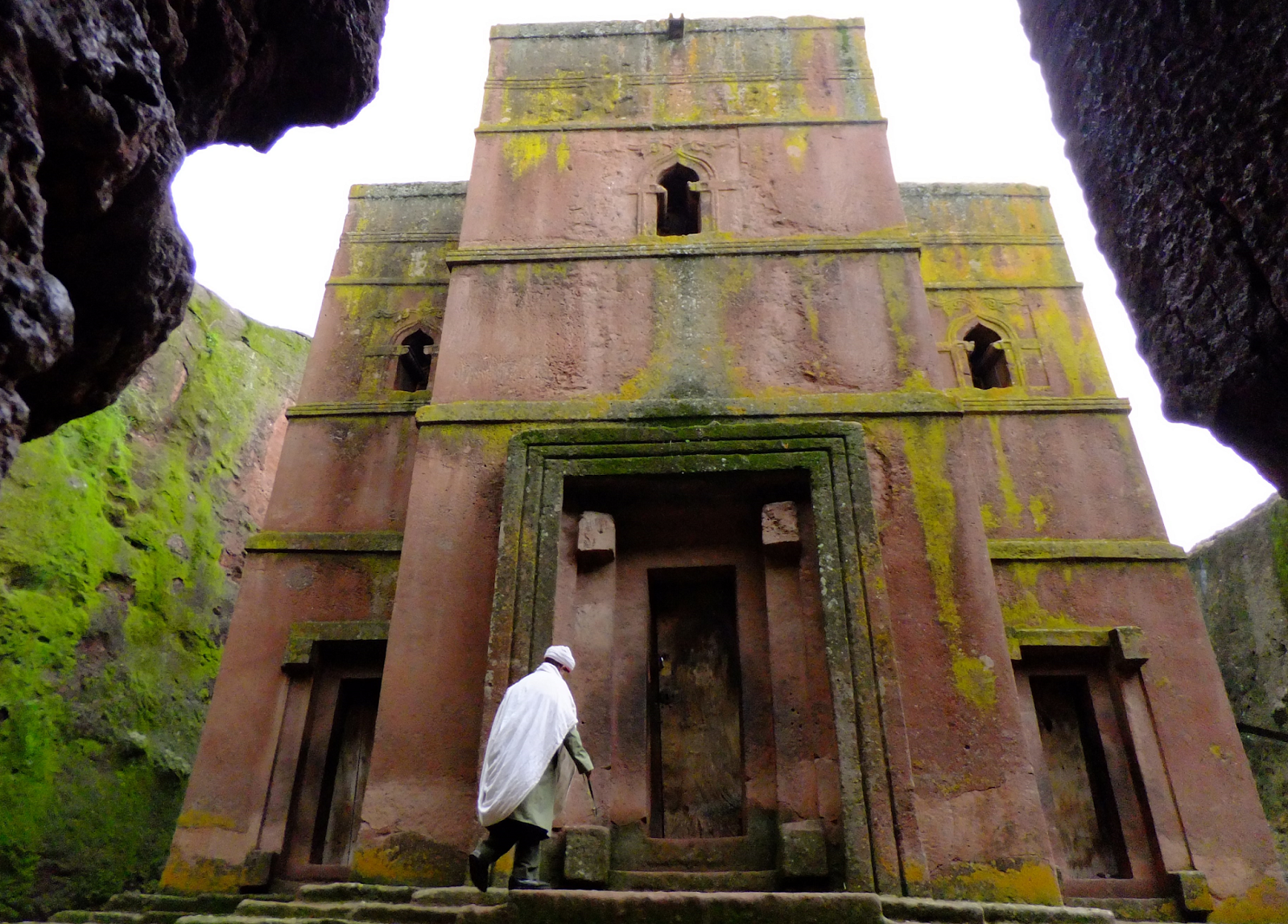
Eiffel Tower, France: 324 m                St George's church, Ethiopia: 12 m


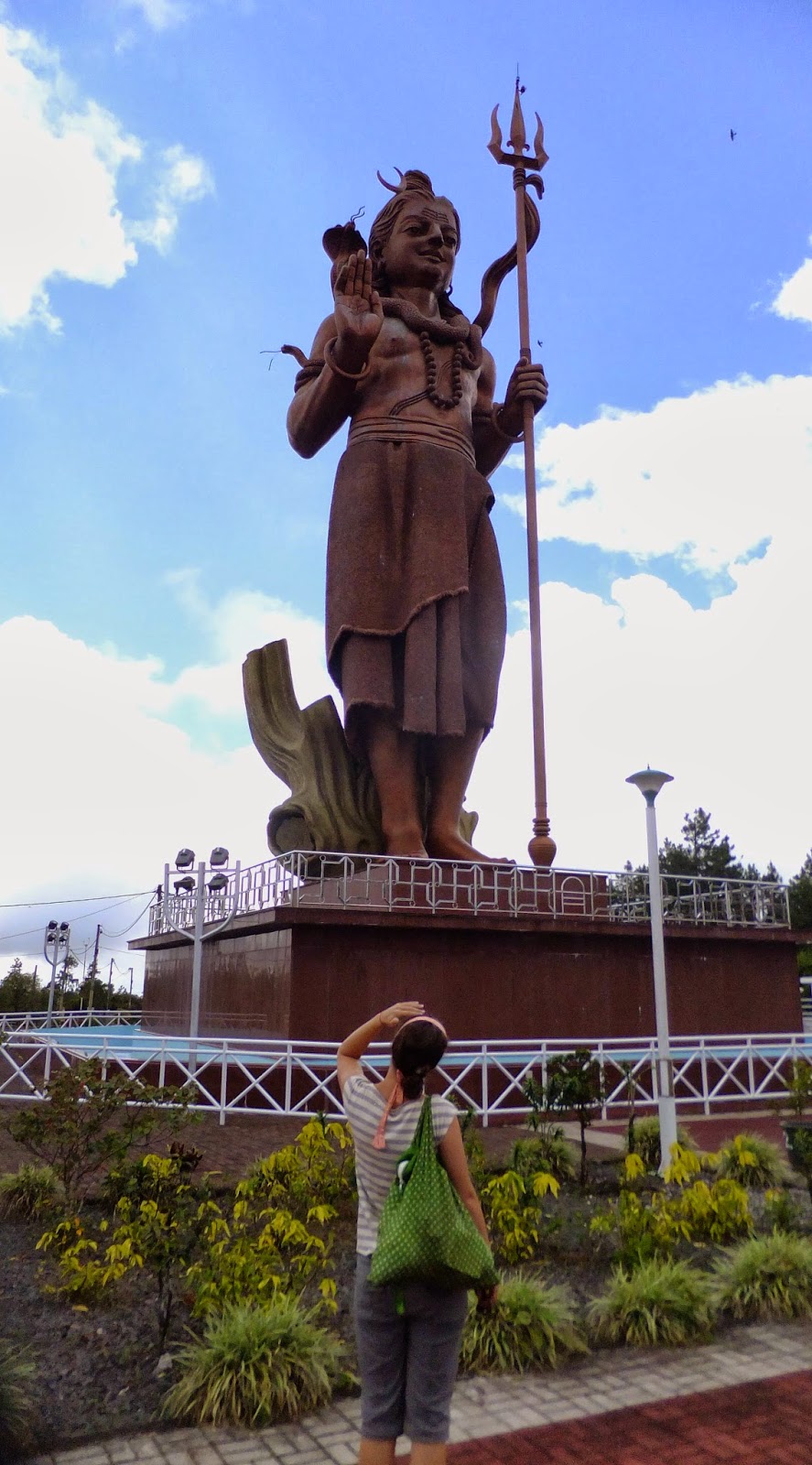
  Faro, Uruguay: 34 m                        Shiva statue, Mauritius: 33 m 


Qutb Minar, India: 73 m                 Calgary Tower, Canada: 191 m


CN Tower, Canada: 553 m                        Taj Mahal, India: 73 m

To see the difference in height between these structures, it would be even easier if we graphed them. I'll start by putting the heights up the y axis (the vertical line), and the names of the structures along the x axis (the horizontal line). Then, I'll use bars to show their heights. Now, I can really see how tall the CN Tower is compared with the other structures!


Organizing information in a graph is a great way to make more sense of it!

Friday, 28 February 2014

Uruguay: Montevideo


The capital city of Uruguay is Montevideo, a three and a half hour bus ride from Colonia. On the way, we passed many open fields where cows grazed. Uruguay had bad flooding while I was there (remember the stormy pictures from Colonia), meaning there were mudslides in some areas. I was fine, though, as I stayed very close to the coast. Uruguay is home to many nice beaches (particularly in the Punta del Este area), but I didn't get a chance to visit any.


I stayed in the Old City in Montevideo. A part of the old city wall is still standing, as you can see in my picture. A statue of the Uruguayan hero, Jose Gervasio Artigas, is found in the Plaza Independencia above his grave. He fought for the freedom and independence of the Uruguayan people from the Spanish. In 1811, he led a revolution that defeated the Spanish authorities. He is sometimes called the "Father of Uruguay."


The most happening area in town when I arrived was down at the pier, because it was Sunday, and everyone was out fishing. On the way, I passed many buildings with interesting Spanish architecture, that I haven't really seen before.


When most people talk about the big Carnaval celebration in February, they usually think of Brazil. Bright and colourful costumes, dancing, and parades with big floats are all pictures that come to mind. But Montevideo is also a big party town. Unfortunately, the parades were cancelled because of the rain (the drums they use have a skin on them that is very sensitive to water, so the drums would get wrecked if they were out in the rain). But, I did pass a park that was decorated for the celebration! One positive thing that happened because of the rain, was that the Philharmonic Orchestra held their free concert inside the beautiful Theatre Solis, instead of outside as planned. I had wanted to tour the theatre anyways, but being able to listen to the orchestra was that much more beautiful!


In Uruguay, the most common foods people eat are barbecued meats, especially 'chorizo' (sausage) and 'chivito' (a sort of hamburger often made of lamb, with an egg on top). There were many food trucks at street corners selling these fast foods. To drink, Uruguayans love mate tea. You press tea leaves into a mug, add hot water, and drink it through a metal straw that filters out the leaves. At a museum I saw some really interestingly designed mate mugs.


Because of their open fields that are great for farming and ranching, Uruguay has a history steeped with cowboy tradition, like Calgary. Here, the cowboys are called 'gauchos' and they traditionally wear floppy hats, similar to a French beret, instead of Western cowboy hats. I saw a few in the mountains in Chile leading groups of horses.


With only a week in Uruguay, I didn't get to see a lot. But the time I spent there was very enjoyable. I found it to be a beautiful country with very friendly, laid-back people. Every day I find that my Spanish is improving a little bit more, and everyone I spoke with in Uruguay was really patient with me when I tried to communicate. I was sad to leave, but I had a flight booked already to head back to Argentina. This time, I am moving South, to the southest tip of South America, to be exact!


Friday, 14 February 2014

Uruguay: Colonia


After a quick, hour-long ferry ride, I was across the river and in Uruguay. It was the first country that I'd entered by boat. Because the town Colonia del Sacramento is so close to Buenos Aires, many citizens visit for the weekend. It's a beautiful old town with narrow cobblestone streets and buildings built over 300 years ago.


Uruguay was an area that was fought over between the Spanish (who settled in Argentina, and much of South America) and the Portuguese (who settled in Brazil). You'll notice that Uruguay sits right in between the two. Colonia went back and forth between the Spanish and Portuguese many times, but in the end, the Spanish gained control of it in 1777. Later, Uruguay gained its own independence. (To the right is a picture of the oldest church in Uruguay).


All off the street signs in Colonia are cute tiled pieces
in blue and white.

In Uruguay, I celebrated 200 days of travelling. There have been many ups and downs of the trip so far, but it's amazing to think of all the things I have seen and done. Sometimes you need to persevere through hard times to reach your goals, and although it would have been easy to give up and fly home to a warm, clean, comfortable housemany times, I'm so proud of myself for continuing. I'm also so thankful for the time I have to explore the world!